Category: Personal Injury

  • What Evidence Helps Prove a Personal Injury Claim?

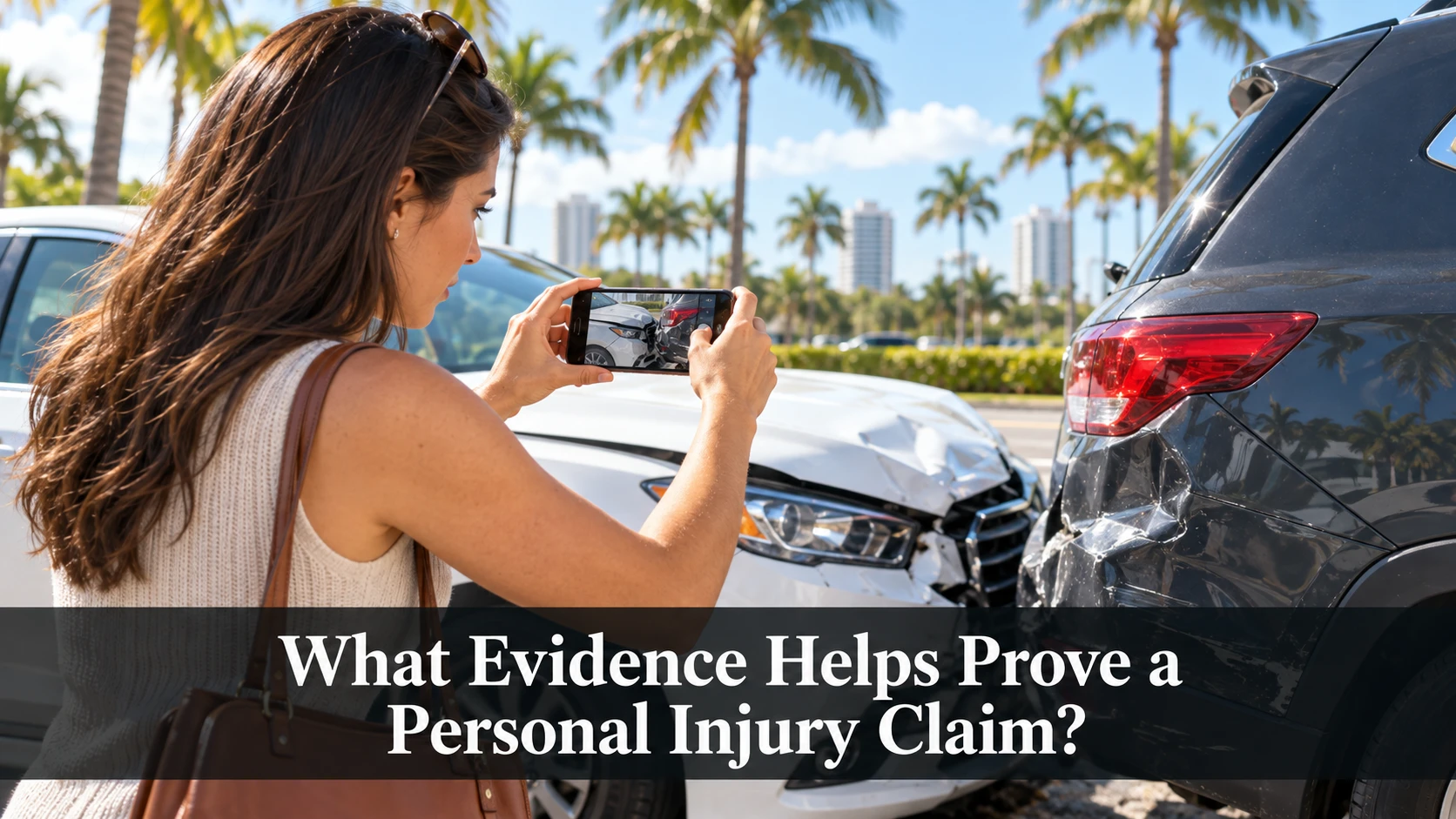
    What Evidence Helps Prove a Personal Injury Claim?

    Illustrative image. The picture above is computer-generated. The people, vehicles and events shown are not actual clients or cases.

    Personal injury cases are built on evidence, not assumptions. A person may sincerely believe another party caused an injury, but an insurance company or court will look for information that supports how the event happened, what injuries resulted, and what losses can be connected to those injuries.

    Different cases require different proof. A car crash, slip-and-fall, and truck collision will not have identical evidence.

    The Event

    Evidence About How the Event Happened

    Scene photographs, surveillance video, dash-camera footage, incident or crash reports, witness information, roadway or property conditions, and physical damage can help reconstruct an event. In complex cases, electronic records or expert analysis may also become relevant.

    Preserve original files when possible. Cropped screenshots and social-media reposts may lose metadata or context.

    Medical

    Medical Documentation

    Medical records can help show symptoms, diagnoses, treatment, restrictions, and the course of recovery. Bills show a different part of the story: what was charged, processed, or owed.

    Consistency and accuracy matter more than trying to “build” a record. Seek medical care based on health needs, not because a blog says a certain number of visits will increase a claim.

    Financial Loss

    Evidence of Financial Loss

    Wage records, employer communications, tax documents, repair estimates, receipts, and invoices may help document claimed economic losses. Future losses generally require more than speculation and may involve medical or vocational information.

    Keep source documents rather than relying on a handwritten total. A well-organized file makes review easier and more reliable.

    Coverage

    Insurance and Coverage Records

    The declarations page, full policy, denial letters, reservation-of-rights letters, settlement offers, and adjuster communications can be important. Coverage issues may determine which policies are available even when fault is relatively clear.

    Do not discard old policy documents simply because a carrier has opened a claim.

    Time-Sensitive

    Evidence That Can Disappear

    Video may be overwritten, vehicles repaired, floor conditions cleaned, products discarded, and witnesses become harder to locate. In appropriate cases, lawyers may send preservation requests or take other steps to prevent loss of relevant information.

    That is one reason early legal review can be useful when the incident is serious or evidence is fragile.

    Accuracy

    Keep the Record Accurate

    Do not create exaggerated symptom diaries, coach witnesses, alter photographs, or post selectively edited accident content. Evidence is most useful when it is authentic and complete.

    If you have questions about what should be preserved after a Brandon-area injury, Glaros Law can review the matter and explain what types of information may be relevant.

    Key Takeaway

    Practical Takeaway

    A useful way to manage evidence is to separate it into four folders: event evidence, medical records, financial records, and insurance communications. Keep originals when possible and make backup copies. This system makes it easier to identify missing information and avoids sending an insurer a disorganized mix of documents. If litigation later becomes necessary, preserving the original form and date of records can also reduce questions about authenticity.

    To learn more, see our Brandon personal injury lawyer page. Related reading: How Florida Comparative Negligence Can Affect an Injury Claim and What to Do After a Car Accident in Brandon, FL. If you have questions about your own situation, contact the firm to schedule a free consultation.

    Further Reading

    Official sources on this topic include Florida traffic crash reports (Florida Highway Safety and Motor Vehicles) and Section 316.066, Florida Statutes (written crash reports). Statutes, rules, and agency pages can change, so check the current version.

    Legal Information

    This article is for general educational information only. It is not legal advice, does not create an attorney-client relationship, and may not reflect legal changes after publication. Outcomes and legal rights depend on specific facts. Consult a licensed Florida attorney about your circumstances. See our Terms of Use and Legal Disclaimer.

    Frequently Asked Questions

    What Evidence Helps Prove a Personal Injury Claim

    Usually not by themselves. Liability, medical causation, damages, and insurance issues can require several types of evidence.

    Yes. Original files may preserve metadata and context that screenshots or edited versions do not.

    Public or discoverable content may become relevant in some disputes. Avoid posting claims or edited narratives about an active matter.
  • Should You Talk to the Insurance Adjuster After an Accident?

    Should You Talk to the Insurance Adjuster After an Accident?

    Illustrative image. The picture above is computer-generated. The people, vehicles and events shown are not actual clients or cases.

    Insurance adjusters are part of the ordinary claims process. After a crash or other accident, an adjuster may contact you to gather facts, inspect damage, request records, discuss coverage, or evaluate a claim. The fact that an adjuster calls is not inherently a problem. The challenge is knowing what information is appropriate to provide and when a request deserves closer review.

    This article offers general communication principles. Your policy may impose specific duties, and a third-party insurer may stand in a different position than your own carrier.

    Insurance

    Know Who the Adjuster Represents

    Start by identifying the company, claim number, and whose insurance is involved. An adjuster for your own carrier is not the same as an adjuster representing another driver or business. The applicable policy relationship can affect what information is requested and why.

    Ask for important requests in writing when practical. Written correspondence reduces misunderstandings and makes it easier to review what the carrier is actually asking for.

    Accuracy

    Be Accurate, Not Speculative

    Provide facts you know. If you do not know an answer, say that rather than estimating. Early after a collision, people may not know the full medical picture, repair cost, or sequence of events. Guessing can create inconsistencies later.

    Avoid diagnosing yourself or predicting recovery. Medical questions are better answered through appropriate care and records.

    Statements

    Understand Requests for Recorded Statements and Authorizations

    Some claims involve requests for recorded statements, medical authorizations, or broad releases. Whether you are required to provide something can depend on the policy, the type of claim, and current law.

    Before signing a document or agreeing to a broad request you do not understand, read it carefully and consider obtaining advice. A signature can have consequences that a casual phone conversation does not make obvious.

    Early Offers

    Do Not Treat an Early Offer as a Simple Math Problem

    An early settlement may arrive before treatment is complete, future needs are clear, or all bills are known. A settlement can also include release language that ends further claims. That does not mean every early offer is unfair; it means the terms should be understood before acceptance.

    Ask what the payment covers, what claims are being released, whether outstanding medical balances exist, and whether other claims remain unresolved.

    Record Keeping

    Keep a Communication Log

    Record the date, company, adjuster name, claim number, and subject of significant calls. Save emails, letters, estimates, and notices. A simple log helps you avoid repeating information and gives a lawyer a clearer history if legal review becomes necessary.

    For a Brandon-area injury claim involving disputed liability, significant injuries, or a settlement you are unsure about, Glaros Law can discuss the circumstances and explain potential next steps.

    Key Takeaway

    Practical Takeaway

    Before an important call, write down the basic facts you know and the questions you want answered. Afterward, save a brief note of what was discussed. That simple habit can reduce inconsistencies and make later review easier. If an adjuster asks for a broad authorization, recorded statement, or final release that you do not understand, slow down long enough to read the request and obtain advice if necessary. Being cooperative does not require guessing or signing documents blindly.

    To learn more, see our Brandon car accident lawyer and personal injury pages. Related reading: What Compensation Can You Recover After a Brandon Car Accident?. If you have questions about your own situation, contact the firm to schedule a free consultation.

    Further Reading

    Official sources on this topic include Consumer guides (Florida Department of Financial Services), Automobile Insurance Consumer Pamphlet (The Florida Bar), and Section 627.4137, Florida Statutes (disclosure of liability insurance information). Statutes, rules, and agency pages can change, so check the current version.

    Legal Information

    This article is for general educational information only. It is not legal advice, does not create an attorney-client relationship, and may not reflect legal changes after publication. Outcomes and legal rights depend on specific facts. Consult a licensed Florida attorney about your circumstances. See our Terms of Use and Legal Disclaimer.

    Frequently Asked Questions

    Should You Talk to the Insurance Adjuster After an Accident

    The answer can depend on which insurer is asking, your policy obligations, and the type of claim. Review the request before agreeing.

    Read the scope carefully. If you do not understand the request or its consequences, consider legal advice before signing.

    Yes, requesting written terms can help you understand what is being offered and what release or conditions may apply.

  • How Florida Comparative Negligence Can Affect an Injury Claim

    How Florida Comparative Negligence Can Affect an Injury Claim

    Illustrative image. The picture above is computer-generated. The people, vehicles and events shown are not actual clients or cases.

    Not every accident is a simple story in which one person is entirely responsible and everyone else is fault-free. Drivers may make competing mistakes, property owners and visitors may disagree about what was visible, and several parties may have contributed to the same event. Florida law has rules for allocating fault in negligence cases, but those rules have changed over time and can be fact-sensitive.

    This article explains the concept of comparative negligence at a high level. It intentionally avoids stating a current percentage threshold or predicting how the rule applies to a particular claim without reviewing current law and the evidence.

    Records & Evidence

    Shared Fault Is an Evidence Question

    Insurance companies and courts do not determine fault from labels alone. They look at evidence. In a vehicle case, that may include photographs, vehicle positions, traffic controls, witness statements, video, electronic data, and the drivers’ accounts. In a premises case, the evidence may include inspection records, photographs, maintenance history, warning signs, and what each person could reasonably observe.

    A quick statement such as “I am probably partly to blame” is not a substitute for an investigation.

    Liability

    Why Fault Allocation Matters

    When a legal system allocates fault among participants, the allocation can affect whether and how damages are recoverable. The precise effect depends on current Florida law and the facts of the case.

    Because Florida’s comparative-fault framework has been amended, older articles may describe a rule that no longer applies to newer incidents. Before publishing an exact formula, percentage, or cutoff, verify the current statute and any relevant exceptions.

    Liability

    Common Situations Where Fault May Be Disputed

    Shared-fault arguments often arise in lane-change crashes, intersection collisions, pedestrian or bicycle incidents, multi-vehicle pileups, and slip-and-fall matters. One party may argue that another failed to keep a proper lookout, ignored a warning, followed too closely, turned unexpectedly, or otherwise contributed to the event.

    Those arguments are allegations, not conclusions. The evidence and applicable legal standards determine what weight they receive.

    Next Steps

    What You Can Do When Fault Is Contested

    Preserve objective records. Keep photographs, report information, witness contact details, communications, and any available video. Avoid editing or posting accident footage in a way that could remove context.

    If an insurer asks for a recorded statement or presents a fault determination you do not understand, consider getting legal advice before making important decisions. A lawyer can review the evidence and explain the legal framework that applies to the incident date.

    Legal Review

    Why Legal Review Should Be Current

    Search results can preserve outdated law for years. That is especially risky with comparative negligence because a change in the governing rule can materially affect a claim. A responsible law-firm article should identify the concept, direct readers to current authority, and avoid turning a general educational page into individualized legal advice.

    For a Brandon-area injury matter involving disputed responsibility, Glaros Law can review the facts and explain how current Florida law may apply.

    Key Takeaway

    Practical Takeaway

    If an insurer assigns you a percentage of fault, ask what evidence supports that position. A number in a claim note is not self-proving. Compare it with photographs, video, witness accounts, reports, and the physical sequence of the event. Because the legal effect of shared fault depends on current Florida law, the next step is not to negotiate percentages from memory; it is to understand the evidence and have the governing rule verified for the incident date.

    To learn more, see our Brandon personal injury lawyer and Brandon car accident lawyer pages. If you have questions about your own situation, contact the firm to schedule a free consultation.

    Further Reading

    Official sources on this topic include Section 768.81, Florida Statutes (comparative fault) and Chapter 768, Florida Statutes (negligence). Statutes, rules, and agency pages can change, so check the current version.

    Legal Information

    This article is for general educational information only. It is not legal advice, does not create an attorney-client relationship, and may not reflect legal changes after publication. Outcomes and legal rights depend on specific facts. Consult a licensed Florida attorney about your circumstances. See our Terms of Use and Legal Disclaimer.

    Frequently Asked Questions

    How Florida Comparative Negligence Can Affect an Injury Claim

    It is a framework for addressing situations in which more than one person may have contributed to an injury-producing event.

    Not by itself. Fault is evaluated from the evidence and applicable law, not a single phrase viewed in isolation.

    Florida negligence law has changed over time, so older online explanations may not accurately describe the law governing a newer incident.

  • How Long Do You Have to File a Personal Injury Claim in Florida?

    How Long Do You Have to File a Personal Injury Claim in Florida?

    Illustrative image. The picture above is computer-generated. The people, vehicles and events shown are not actual clients or cases.

    People often search for a single number when they ask how long they have to file a Florida personal injury claim. The problem is that a general internet answer can be dangerously incomplete. Different claims may be governed by different rules, and exceptions, defendant identity, the nature of the injury, and procedural requirements can matter.

    Florida laws have also changed over time. For that reason, this article intentionally does not function as a deadline calculator. It explains the issues that determine timing and why a current, claim-specific review is safer than relying on an old blog post or a date copied from a search result.

    Timing

    “Statute of Limitations” Is Only Part of the Timing Question

    A statute of limitations generally sets a time period for bringing a legal action. But that is not the only timing issue an injured person may face. Insurance policies may contain notice provisions. Claims involving public entities can have special procedures. Evidence may disappear long before a lawsuit deadline expires.

    The practical lesson is simple: the fact that a lawsuit deadline may be months or years away does not mean waiting is harmless.

    The Claim

    The Type of Claim Matters

    A motor-vehicle negligence case, a premises matter, a wrongful death claim, a claim involving a government entity, and a claim involving a defective product can raise different legal questions. Even claims arising from the same event may not share identical timing rules.

    That is why a legal professional begins by identifying the potential claims and parties rather than starting with a generic countdown clock.

    Changing Law

    Why Online Deadline Articles Age Poorly

    Statutes can be amended, court decisions can affect how rules are interpreted, and older articles may remain indexed long after the law changes. A page that accurately described Florida law several years ago may no longer be reliable today.

    Before publishing or relying on an exact deadline, verify the current Florida statute and any case-specific exceptions. Glaros Law recommends treating deadline information as something to confirm, not something to estimate.

    Records & Evidence

    Evidence Has Its Own Clock

    Even when a formal deadline is not close, evidence can become harder to obtain. Security footage may be routinely overwritten. Vehicles and property can be repaired. Witness contact information may be lost. Digital records may be deleted under ordinary retention policies.

    Early preservation can matter because a case is built from evidence, not just a calendar. Keeping photographs, documents, report numbers, and communications organized is a practical first step.

    Timing

    When to Ask for a Deadline Review

    If an injury may lead to a claim, consider getting the timing issue reviewed early, especially if the incident involved a government vehicle or property, a death, a minor, an unusual defendant, a delayed diagnosis, or an event that happened some time ago.

    A lawyer evaluating timing should know the date of the incident, the type of event, the identity of potentially responsible parties, and any notices already received or sent. The lawyer may need additional facts before giving a reliable answer.

    A Better Question

    A Better Question Than “How Many Years Do I Have?”

    Instead of relying on a generic number, ask: “What deadlines and notice requirements apply to this specific matter under current Florida law?” That question is narrower, safer, and more likely to produce a useful answer.

    If your accident or injury occurred in Brandon or the surrounding Tampa Bay area, Glaros Law can discuss the circumstances and identify whether a deadline issue should be reviewed promptly.

    To learn more, see our Brandon personal injury lawyer and personal injury pages. Related reading: What to Do After a Car Accident in Brandon, FL. If you have questions about your own situation, contact the firm to schedule a free consultation.

    Further Reading

    Official sources on this topic include Section 95.11, Florida Statutes (time limits for filing certain actions) and Section 768.28, Florida Statutes (claims against government entities). Statutes, rules, and agency pages can change, so check the current version.

    Legal Information

    This article is for general educational information only. It is not legal advice, does not create an attorney-client relationship, and may not reflect legal changes after publication. Outcomes and legal rights depend on specific facts. Consult a licensed Florida attorney about your circumstances. See our Terms of Use and Legal Disclaimer.

    Frequently Asked Questions

    How Long Do You Have to File a Personal Injury Claim in Florida

    Because the applicable time limit can depend on the claim, defendant, event date, exceptions, and current law. A single number can mislead readers.

    Yes. Video retention, repairs, lost contact information, and ordinary record deletion can affect evidence even when a formal legal deadline is not imminent.

    Use current Florida statutory and court authorities and seek qualified legal advice for a specific matter.

  • When Should You Hire a Personal Injury Lawyer After an Accident?

    When Should You Hire a Personal Injury Lawyer After an Accident?

    Illustrative image. The picture above is computer-generated. The people, vehicles and events shown are not actual clients or cases.

    After an accident, many people wonder whether they should call a lawyer immediately, handle the insurance process themselves, or wait to see how things develop. There is no universal answer. A small property-damage claim and a collision involving surgery, disputed fault, or several insurance policies present very different issues.

    The most useful question is not “Do I need a lawyer because I was in an accident?” It is “Are there legal, medical, insurance, or evidence issues that I do not feel comfortable evaluating on my own?” This article provides general information, not advice about any particular claim.

    Legal Help

    Situations That Often Justify a Consultation

    A consultation may be worth considering when an injury is significant or ongoing, fault is disputed, the other party denies responsibility, a commercial vehicle is involved, several people may share responsibility, or there are questions about available insurance.

    It can also be helpful when an insurer disputes medical treatment, requests extensive information, presents a settlement that is difficult to evaluate, or raises policy exclusions or coverage questions. Consulting an attorney does not require filing a lawsuit. It can simply help clarify the issues.

    Timing

    Why Timing Can Matter Without Rushing a Decision

    Evidence can become harder to obtain with time. Vehicles are repaired, video may be overwritten, witnesses move, and memories fade. Florida law also imposes deadlines on different types of claims, but the applicable deadline can depend on the type of case and other circumstances.

    That does not mean every injured person should sign a representation agreement immediately. It means important questions should not be ignored indefinitely. If you are unsure whether time-sensitive evidence or legal deadlines are involved, ask a qualified Florida lawyer to evaluate that issue specifically.

    The Role

    What a Personal Injury Lawyer Actually Does

    A personal injury attorney may investigate the event, identify relevant insurance, collect records, communicate with insurers, evaluate liability issues, document damages, consult appropriate experts, negotiate a resolution, and, when warranted, prepare a case for litigation.

    The exact work depends on the matter. An ethical lawyer should explain the proposed role, fee arrangement, expected communication, major uncertainties, and what information is needed from the client. No lawyer should guarantee a settlement amount or outcome.

    Preparation

    How to Prepare for a Consultation

    Bring whatever records you already have, but do not delay a conversation merely because the file is incomplete. Helpful materials can include photographs, a crash or incident report number, insurance information, medical provider names, correspondence from carriers, wage information, and a basic timeline.

    Prepare questions too. Ask who would handle the matter, how the firm communicates, what costs may arise, how fees work, what the major issues appear to be, and what the lawyer cannot yet know. A good consultation should leave you better informed even when the answer is that more information is needed.

    Choosing a Lawyer

    Choosing the Right Fit in Brandon

    For a Brandon-area injury matter, local familiarity can be useful, but it should not replace substantive experience. Evaluate whether the attorney regularly handles the type of incident involved, communicates clearly, sets realistic expectations, and can explain the process without pressuring you.

    Glaros Law serves people with personal injury questions in the Tampa Bay area. If you want to discuss an accident in Brandon, the firm can review the circumstances and explain whether representation may be appropriate.

    To learn more, see our Brandon personal injury lawyer and personal injury pages. Related reading: What to Do After a Car Accident in Brandon, FL. If you have questions about your own situation, contact the firm to schedule a free consultation.

    Further Reading

    Official sources on this topic include How to Find a Lawyer in Florida (The Florida Bar), Attorneys’ Fees (The Florida Bar), and Hiring the Right Person to Help Me with My Legal Problems (The Florida Bar). Statutes, rules, and agency pages can change, so check the current version.

    Legal Information

    This article is for general educational information only. It is not legal advice, does not create an attorney-client relationship, and may not reflect legal changes after publication. Outcomes and legal rights depend on specific facts. Consult a licensed Florida attorney about your circumstances. See our Terms of Use and Legal Disclaimer.

    Frequently Asked Questions

    When Should You Hire a Personal Injury Lawyer After an Accident

    No. The need for counsel depends on the seriousness and complexity of the matter, including injury, fault, insurance, evidence, and disputed issues.

    No. A consultation is a way to understand possible options. Many matters never proceed to trial.

    A responsible evaluation generally depends on facts, medical information, liability, insurance, and other evidence. Early guarantees are a warning sign.