Category: Auto Accidents

  • Common Causes of Car Accidents in Brandon, Florida

    Common Causes of Car Accidents in Brandon, Florida

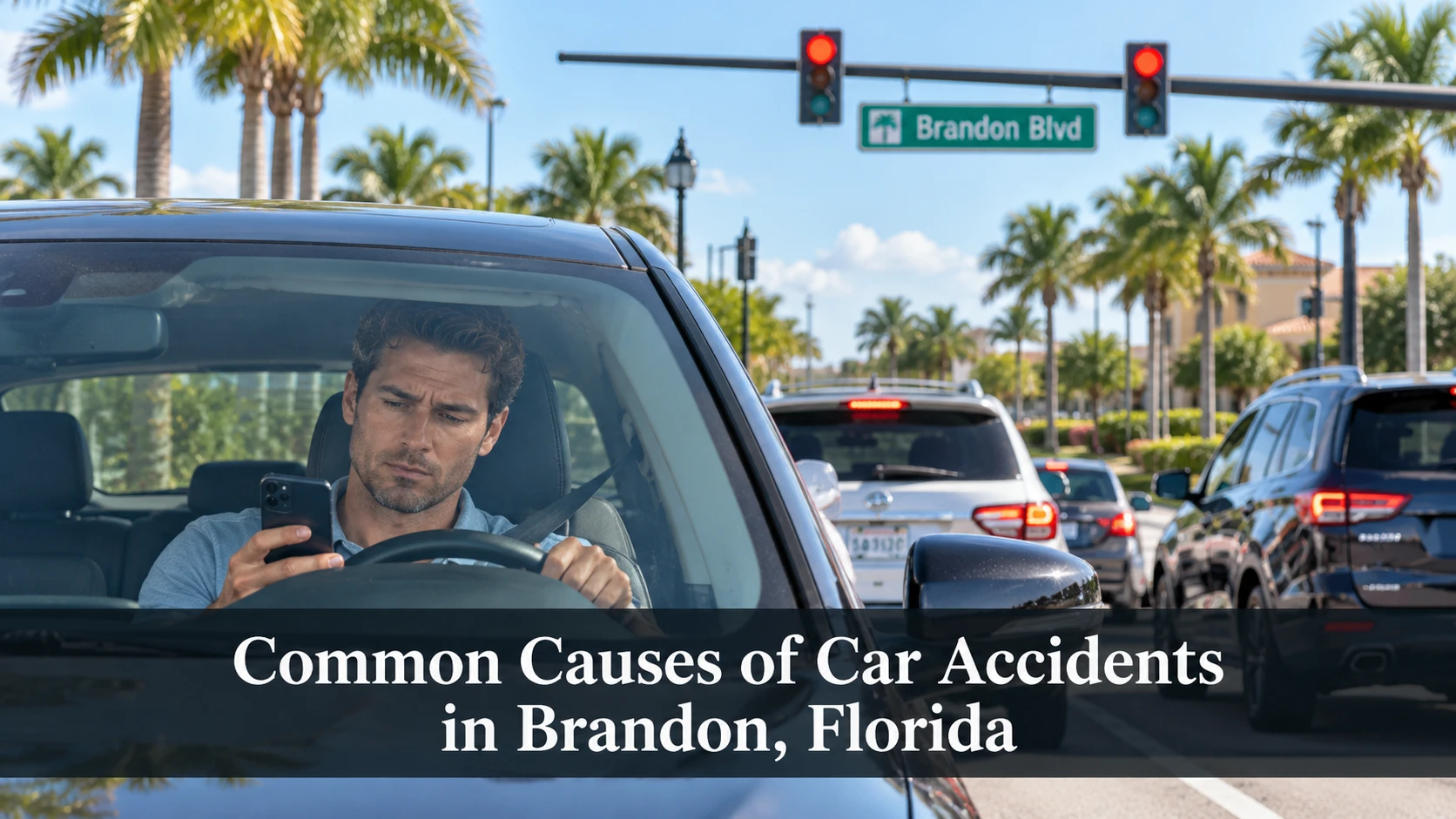
    Illustrative image. The picture above is computer-generated. The people, vehicles and events shown are not actual clients or cases.

    Brandon’s mix of neighborhood streets, retail corridors, commuter traffic, interstate access, and construction can create many different crash scenarios. It is tempting to describe every collision as “speeding,” “distraction,” or “careless driving,” but a legal evaluation requires more than a label.

    The more useful question is: what happened, what evidence shows how it happened, and which actions were legally significant?

    Rear-End

    Rear-End Collisions

    Rear-end crashes can occur in stop-and-go traffic, at traffic lights, or when congestion develops unexpectedly. Following distance, speed, visibility, roadway conditions, and the movement of multiple vehicles may all be relevant.

    Even when a crash pattern seems familiar, do not assume the legal outcome is automatic. Multi-vehicle impacts and sudden lane changes can complicate the sequence.

    Intersections

    Intersection and Turning Crashes

    Brandon-area commercial roads include frequent driveways, signalized intersections, and left-turn movements. A collision may involve questions about signal phases, right of way, sight lines, turning paths, or whether a driver had enough time to react.

    Nearby surveillance or dash-camera footage can sometimes help reconstruct what occurred. If video may exist, timing matters because many systems overwrite recordings.

    Lane Changes

    Lane-Change and Merging Collisions

    I-75, the Selmon Expressway, entrance ramps, and multilane arterials create frequent merging and lane-change situations. Relevant evidence may include vehicle contact points, roadway markings, dash-camera footage, electronic data, and witness accounts.

    A statement that one driver “came over” does not by itself resolve every issue. The full sequence matters.

    Driver Conduct

    Distracted, Fatigued, or Impaired Driving Allegations

    Distraction, fatigue, and impairment can be important in some crashes, but allegations should be supported by evidence. Phone records, witness observations, law-enforcement investigation, video, and other information may be relevant depending on the case.

    Avoid repeating unverified accusations online. A personal injury claim should be based on provable facts.

    Conditions

    Weather, Visibility, and Road Conditions

    Rain, glare, darkness, construction, debris, or poor visibility can affect driving conditions. Those factors do not automatically excuse unsafe conduct, and they do not automatically establish fault either. Drivers and other parties may have different responsibilities depending on the circumstances.

    Photographs taken close in time to the collision can help document conditions that later change.

    Records & Evidence

    Evidence Matters More Than the Category

    The “cause” listed in a blog article is not the same as legal liability in a specific crash. Reports, physical evidence, witness statements, video, vehicle data, medical records, and current law may all contribute to the analysis.

    If you were injured in a Brandon collision and fault is disputed, Glaros Law can review the available information and discuss whether further investigation may be appropriate.

    Key Takeaway

    Practical Takeaway

    For Brandon drivers, the most useful local takeaway is to document the specific roadway context rather than relying on generic accident labels. A photo that shows a turn lane, signal placement, construction barrier, or merging distance may be more valuable than a close-up of a dent alone. If a nearby business or home appears to have cameras, record the location so a preservation request can be considered before routine deletion occurs.

    To learn more, see our Brandon car accident lawyer page. Related reading: What to Do After a Car Accident in Brandon, FL. If you have questions about your own situation, contact the firm to schedule a free consultation.

    Further Reading

    Official sources on this topic include Florida Crash Dashboard (Florida Highway Safety and Motor Vehicles), Distracted driving (NHTSA), and Florida traffic crash reports (Florida Highway Safety and Motor Vehicles). Statutes, rules, and agency pages can change, so check the current version.

    Legal Information

    This article is for general educational information only. It is not legal advice, does not create an attorney-client relationship, and may not reflect legal changes after publication. Outcomes and legal rights depend on specific facts. Consult a licensed Florida attorney about your circumstances. See our Terms of Use and Legal Disclaimer.

    Frequently Asked Questions

    Common Causes of Car Accidents in Brandon, Florida

    Busy intersections, multilane commercial roads, interstate ramps, and congested corridors can produce many crash types, but this article does not rank locations by accident frequency.

    Not necessarily. The sequence, multiple impacts, sudden movements, and other evidence may affect the analysis.

    Many commercial and residential systems automatically overwrite recordings after a set retention period.
  • What Happens If the Other Driver Has No Insurance in Florida?

    What Happens If the Other Driver Has No Insurance in Florida?

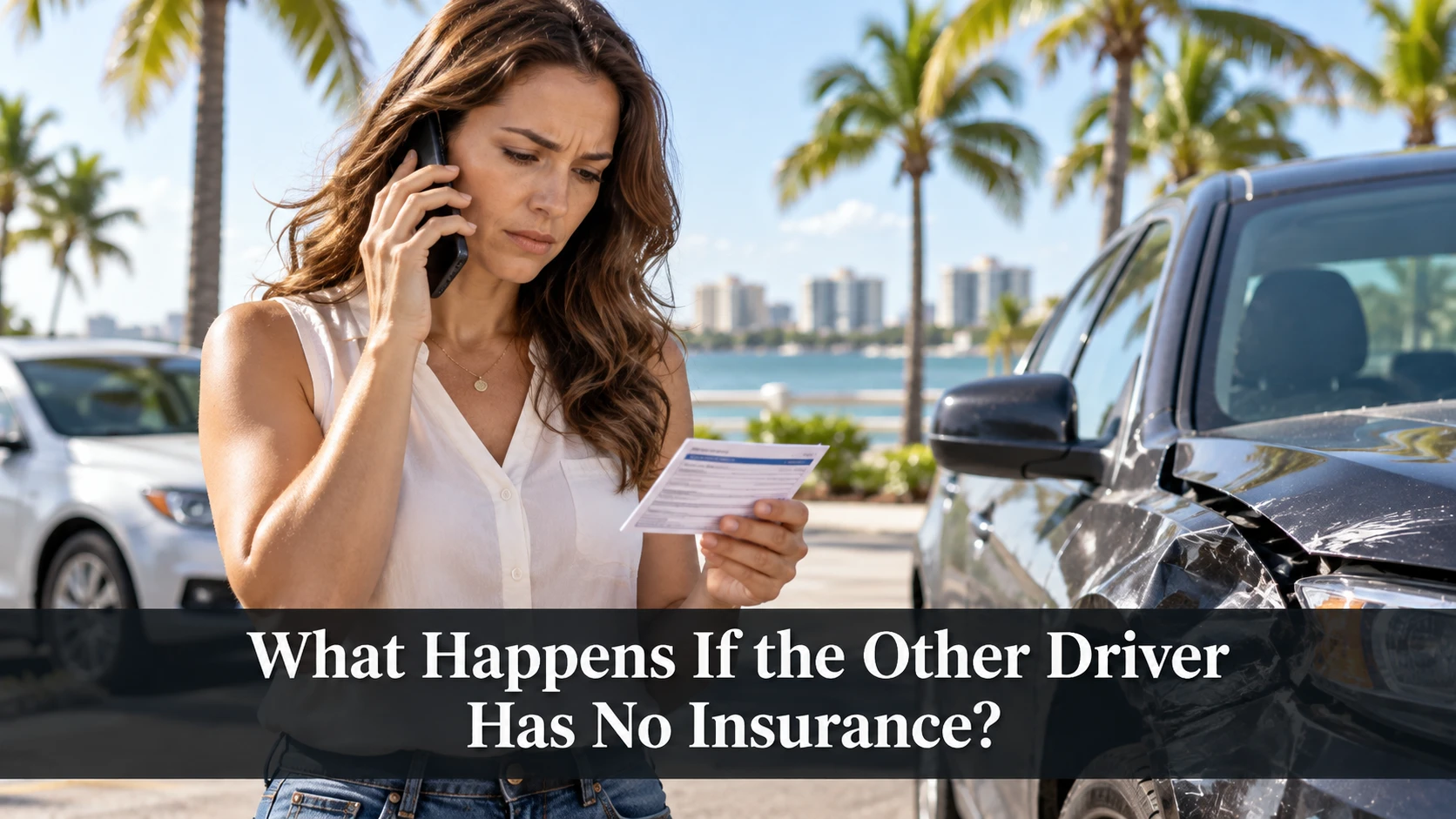
    Illustrative image. The picture above is computer-generated. The people, vehicles and events shown are not actual clients or cases.

    Learning that another driver may be uninsured can make an already stressful crash feel much worse. It does not automatically mean there are no options, but it changes the questions that need to be asked.

    Coverage can depend on the injured person’s policy, other potentially applicable policies, vehicle ownership, the people involved, and the facts of the collision. This article explains the general framework without assuming that any particular coverage applies.

    Insurance

    Confirm the Insurance Situation First

    Do not rely only on what a driver says at the scene. Insurance information can be incomplete, expired, or misunderstood. A crash report, carrier verification, and policy review may clarify whether coverage existed on the date of the accident.

    Likewise, “uninsured” and “underinsured” are not always the same problem. A driver may have some coverage but not enough to address the losses being claimed.

    Insurance

    Review Your Own Auto Policy

    Your own policy may contain coverages that become relevant after a collision involving an uninsured or underinsured driver. Whether a coverage applies depends on the policy and current Florida law.

    Locate the complete policy and declarations page rather than relying on an insurance card. If you are unsure what a provision means, ask the carrier for a written explanation or have the policy reviewed by a qualified professional.

    Parties

    Identify Every Potentially Relevant Party

    A collision can involve more than the person behind the wheel. Vehicle ownership, employment relationships, commercial use, and other facts may affect who is potentially responsible. That does not mean every owner or employer is liable; it means the relationships should be investigated before conclusions are drawn.

    This can be particularly important in crashes involving delivery vehicles, company cars, rideshare activity, or borrowed vehicles.

    Records & Evidence

    Preserve Evidence Even When Coverage Looks Limited

    Low or uncertain coverage does not make evidence irrelevant. Photographs, witness information, crash records, medical documentation, and communications can still matter. Coverage questions sometimes take time to resolve.

    Avoid abandoning documentation because an early conversation makes the situation seem hopeless. At the same time, avoid assuming that a lawyer can create insurance or assets where none exist.

    Caution

    Be Wary of Guarantees

    An uninsured-driver case is a good example of why settlement promises are inappropriate. The strength of liability, severity of injury, policy language, available coverage, collectability, and other facts all influence the practical options.

    A careful evaluation begins with documents and evidence, not a guaranteed number.

    Legal Help

    Questions for a Brandon Car Accident Attorney

    If an uninsured or underinsured motorist is involved, ask what policies should be reviewed, whether additional parties need investigation, what notices may be required, and what evidence should be preserved.

    Glaros Law can review a Brandon-area collision and discuss whether the firm may be able to help investigate insurance and liability issues.

    Key Takeaway

    Practical Takeaway

    The practical goal is to replace assumptions with documents. Confirm the other driver’s insurance status, locate your own complete policy, preserve the crash evidence, and keep written carrier correspondence. If the available coverage is uncertain or the injuries are significant, a legal review can help identify additional policies or parties that deserve investigation. That review cannot guarantee a source of recovery, but it can prevent an early “there is no insurance” conclusion from ending the analysis before the relevant records are checked.

    To learn more, see our Brandon car accident lawyer and personal injury pages. Related reading: Who Pays Medical Bills After a Car Accident in Florida?. If you have questions about your own situation, contact the firm to schedule a free consultation.

    Legal Information

    This article is for general educational information only. It is not legal advice, does not create an attorney-client relationship, and may not reflect legal changes after publication. Outcomes and legal rights depend on specific facts. Consult a licensed Florida attorney about your circumstances. See our Terms of Use and Legal Disclaimer.

    Frequently Asked Questions

    What Happens If the Other Driver Has No Insurance in Florida

    Not necessarily. Potential options depend on available policies, responsible parties, assets, and the facts. A claim-specific review is needed.

    Locate the full auto policy and declarations page, along with the crash report information and any correspondence from insurers.

    Do not assume coverage applies. Availability and scope depend on the policy, elections, and applicable law.

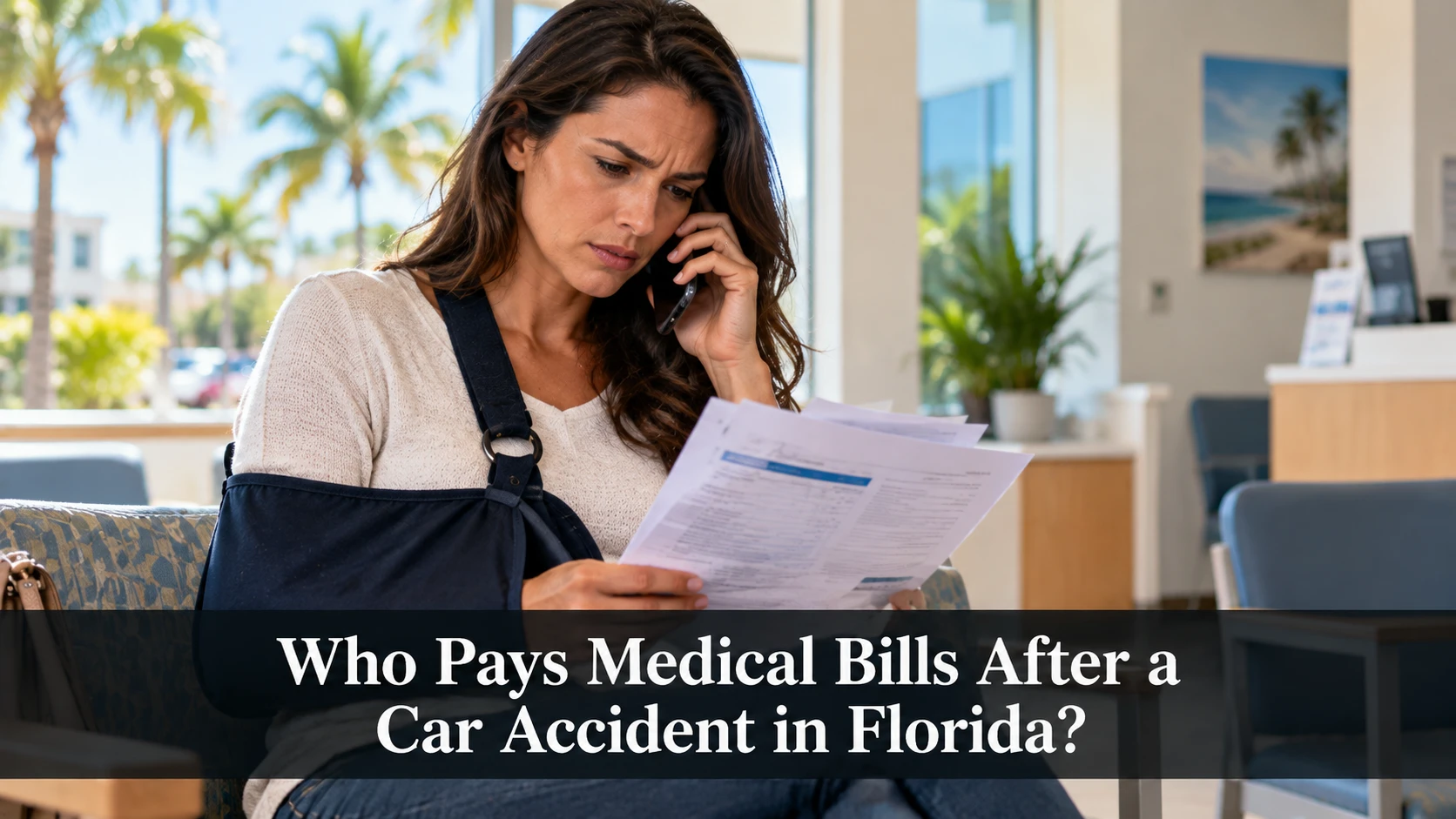
  • Who Pays Medical Bills After a Car Accident in Florida?

    Who Pays Medical Bills After a Car Accident in Florida?

    Illustrative image. The picture above is computer-generated. The people, vehicles and events shown are not actual clients or cases.

    Medical bills are often one of the first financial concerns after a crash. Florida’s insurance system can make the answer more complicated than “the at-fault driver pays everything.” Different forms of insurance, policy terms, medical billing practices, and liability issues may interact.

    Because coverage rules and statutory requirements can change, this article does not state a universal payment formula. Instead, it explains the main questions to ask and the records to keep.

    Billing

    The Medical Provider Needs Billing Information

    Hospitals, physicians, imaging centers, therapists, and other providers may ask for auto-insurance information, health-insurance information, or details about how the injury occurred. Provide accurate information and keep copies of what you submit.

    If a bill is denied, reduced, or redirected, ask for the written explanation rather than assuming the balance is correct. Billing errors and coordination issues can occur even when no one is disputing that treatment took place.

    Insurance

    Auto Insurance May Be Part of the Picture

    Florida has specific auto-insurance rules that may affect how certain medical expenses are handled after a crash. The exact application can depend on current law, policy language, timing, eligibility, and the facts.

    Rather than relying on an old article for coverage limits or deadlines, review the current policy and verify the current Florida rules. If coverage is disputed, written carrier correspondence is especially important.

    Insurance

    Health Insurance Can Also Matter

    Depending on the circumstances, health insurance may pay some accident-related care subject to the plan’s terms. A health insurer may later assert reimbursement or other rights depending on the plan and the claim. Those issues can be technical and should be reviewed before settlement.

    Keep explanations of benefits, invoices, and notices. The amount a provider charges, the amount an insurer allows, and the amount a patient owes can be different numbers.

    Liability

    A Liability Claim Is Not the Same as Immediate Bill Payment

    Even when another party may ultimately be responsible for an accident, a liability claim does not necessarily cause medical providers to wait for the case to end. Bills may continue to arrive while fault and damages are being evaluated.

    This is one reason injury claims can require coordination among providers, insurers, and legal counsel. A settlement discussion should account for known medical obligations rather than focusing only on a gross settlement number.

    Records & Evidence

    What Records Should You Keep?

    Maintain copies of medical bills, explanations of benefits, insurance notices, receipts, medical records, and any letters regarding liens or reimbursement. If a provider sends a balance to collections or gives a deadline, do not ignore it while assuming the injury claim will automatically resolve the issue.

    An organized record lets a lawyer or insurance professional identify what has been billed, what has been paid, what remains disputed, and what may need further review.

    Next Step

    Get a Claim-Specific Answer

    There is no responsible way to identify who will pay every medical bill without reviewing the applicable policies and facts. If you were injured in a Brandon-area crash, Glaros Law can discuss the insurance and liability issues that may affect the claim.

    This article is educational only. It should not be used to make decisions about medical treatment, insurance compliance, or settlement of a specific matter.

    To learn more, see our Brandon car accident lawyer and Brandon personal injury lawyer pages. Related reading: What Compensation Can You Recover After a Brandon Car Accident?. If you have questions about your own situation, contact the firm to schedule a free consultation.

    Further Reading

    Official sources on this topic include Section 627.736, Florida Statutes (personal injury protection benefits), Florida insurance requirements (Florida Highway Safety and Motor Vehicles), and Consumer guides (Florida Department of Financial Services). Statutes, rules, and agency pages can change, so check the current version.

    Legal Information

    This article is for general educational information only. It is not legal advice, does not create an attorney-client relationship, and may not reflect legal changes after publication. Outcomes and legal rights depend on specific facts. Consult a licensed Florida attorney about your circumstances. See our Terms of Use and Legal Disclaimer.

    Frequently Asked Questions

    Who Pays Medical Bills After a Car Accident in Florida

    Not necessarily. Medical billing and liability claims may proceed on different timelines and can involve multiple coverage sources.

    That depends on the circumstances and plan terms. Ask the provider and insurers how the claim is being processed and obtain written explanations.

    They help show what was billed, allowed, paid, denied, or assigned to the patient and can be important when reviewing outstanding balances.

  • What Compensation Can You Recover After a Brandon Car Accident?

    What Compensation Can You Recover After a Brandon Car Accident?

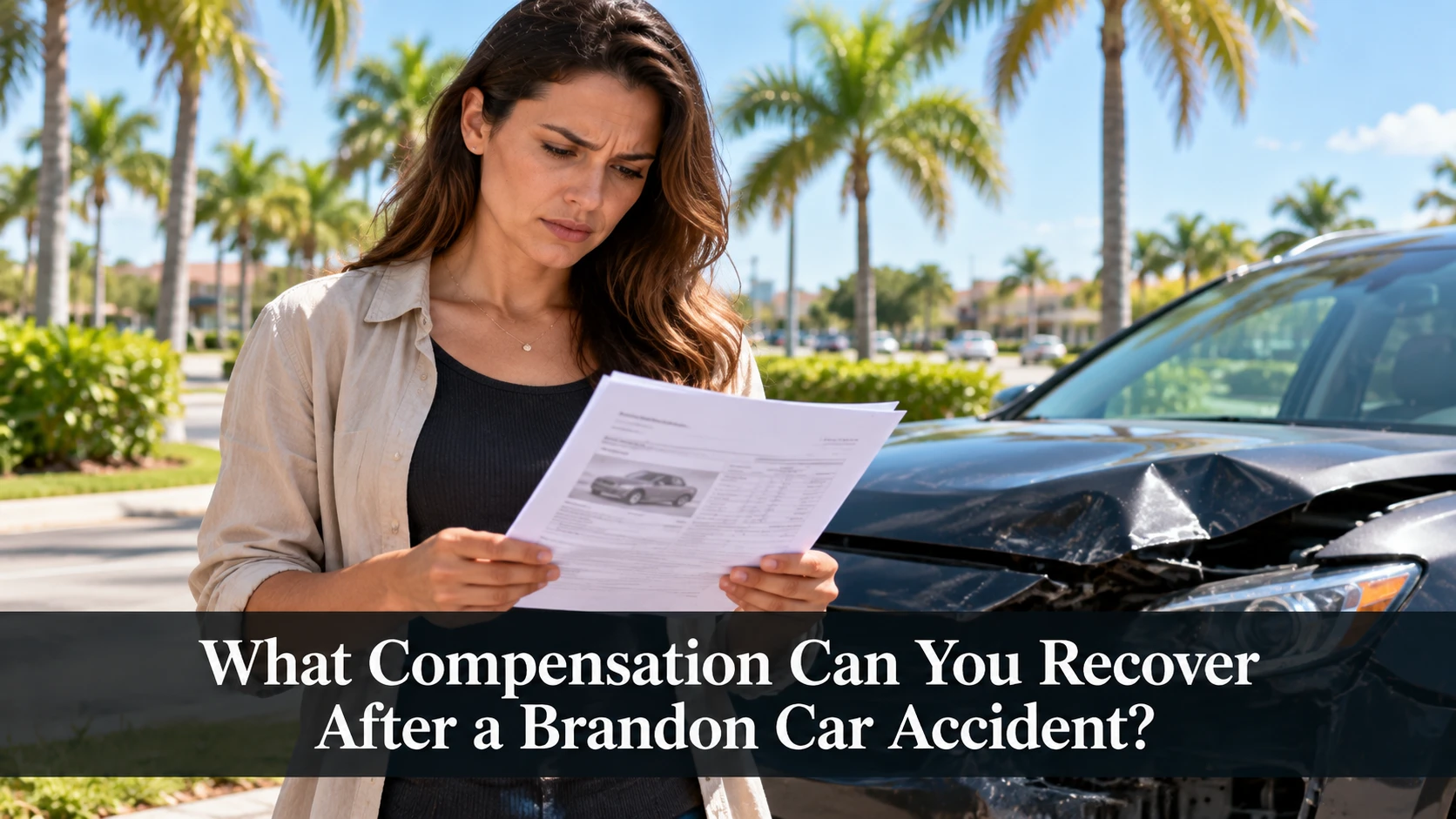
    Illustrative image. The picture above is computer-generated. The people, vehicles and events shown are not actual clients or cases.

    After a crash, it is natural to ask what an insurance claim or personal injury case might cover. The answer is not a preset settlement table. Compensation depends on the facts, the injuries, the available evidence, applicable Florida law, insurance coverage, and whether another party is legally responsible.

    A more useful starting point is to understand the categories of losses that may be evaluated. This article provides a general overview and does not predict what any person can recover.

    Compensation

    Medical Expenses and Treatment-Related Costs

    Accident-related medical care can include emergency treatment, diagnostic testing, physician visits, therapy, medication, and other medically appropriate services. Which expenses are recoverable, who initially pays them, and how insurance interacts with a claim can depend on the policies and circumstances involved.

    Keep complete records. Bills alone may not tell the full story, and medical records alone may not show what was actually charged or paid. An organized file helps a professional understand the financial and medical picture.

    Compensation

    Lost Income and Changes in Ability to Work

    An injury can affect work in different ways. Some people miss a few shifts. Others need modified duties, use paid leave, or experience a longer interruption. In more serious matters, future earning ability may become an issue.

    Documentation can include pay records, employer communications, tax information, work restrictions, and other reliable records. Avoid assuming that every missed dollar is automatically recoverable; legal causation and proof still matter.

    Property

    Vehicle and Other Property Losses

    Vehicle repair or total-loss issues are separate from the physical injury itself, but they are often part of the post-crash process. Repair estimates, photographs, towing invoices, rental records, and valuation documents can be useful.

    Property claims can also involve disagreements about preexisting damage, market value, repair quality, and loss of use. These questions are usually evaluated separately from bodily injury issues.

    Injuries

    Nonfinancial Effects of an Injury

    Personal injury law may also consider certain nonfinancial harms in appropriate cases, but these are highly fact-specific and should not be reduced to a simple multiplier. The seriousness and duration of the injury, medical evidence, functional limitations, and other factors may matter.

    Be skeptical of websites promising a formula such as “medical bills times three.” Real claims do not fit that neatly, and legal standards can change.

    Variation

    Why Two Similar Crashes Can Have Very Different Outcomes

    Two rear-end collisions at the same intersection can produce entirely different claims. One may involve minimal vehicle damage and a short recovery. Another may involve surgery, disputed causation, multiple insurers, or significant work loss.

    The available insurance can also affect practical recovery. A strong liability case does not create coverage that does not exist. Identifying policies and responsible parties is part of evaluating the matter.

    Claim Value

    How to Think About Claim Value Responsibly

    Instead of asking for an instant number, ask what evidence supports each claimed loss, what issues are disputed, what coverage is available, and what current Florida law permits. That approach is slower than an online calculator but much more meaningful.

    Glaros Law can review a Brandon-area accident and discuss the factors that may affect the claim. Any evaluation should be based on the actual facts, not a promise or average settlement figure.

    To learn more, see our Brandon car accident lawyer and Brandon personal injury lawyer pages. If you have questions about your own situation, contact the firm to schedule a free consultation.

    Further Reading

    Official sources on this topic include Section 627.736, Florida Statutes (personal injury protection benefits), Chapter 768, Florida Statutes (negligence), and Consumer guides (Florida Department of Financial Services). Statutes, rules, and agency pages can change, so check the current version.

    Legal Information

    This article is for general educational information only. It is not legal advice, does not create an attorney-client relationship, and may not reflect legal changes after publication. Outcomes and legal rights depend on specific facts. Consult a licensed Florida attorney about your circumstances. See our Terms of Use and Legal Disclaimer.

    Frequently Asked Questions

    What Compensation Can You Recover After a Brandon Car Accident

    Average figures are usually not useful for an individual claim because injuries, liability, evidence, insurance, and losses vary widely.

    In appropriate circumstances, work-related losses may be evaluated, but they must be supported and legally connected to the accident.

    No. Property damage is one piece of evidence. Injury claims are evaluated using medical, factual, legal, and insurance information.

  • What to Do After a Car Accident in Brandon, FL

    What to Do After a Car Accident in Brandon, FL

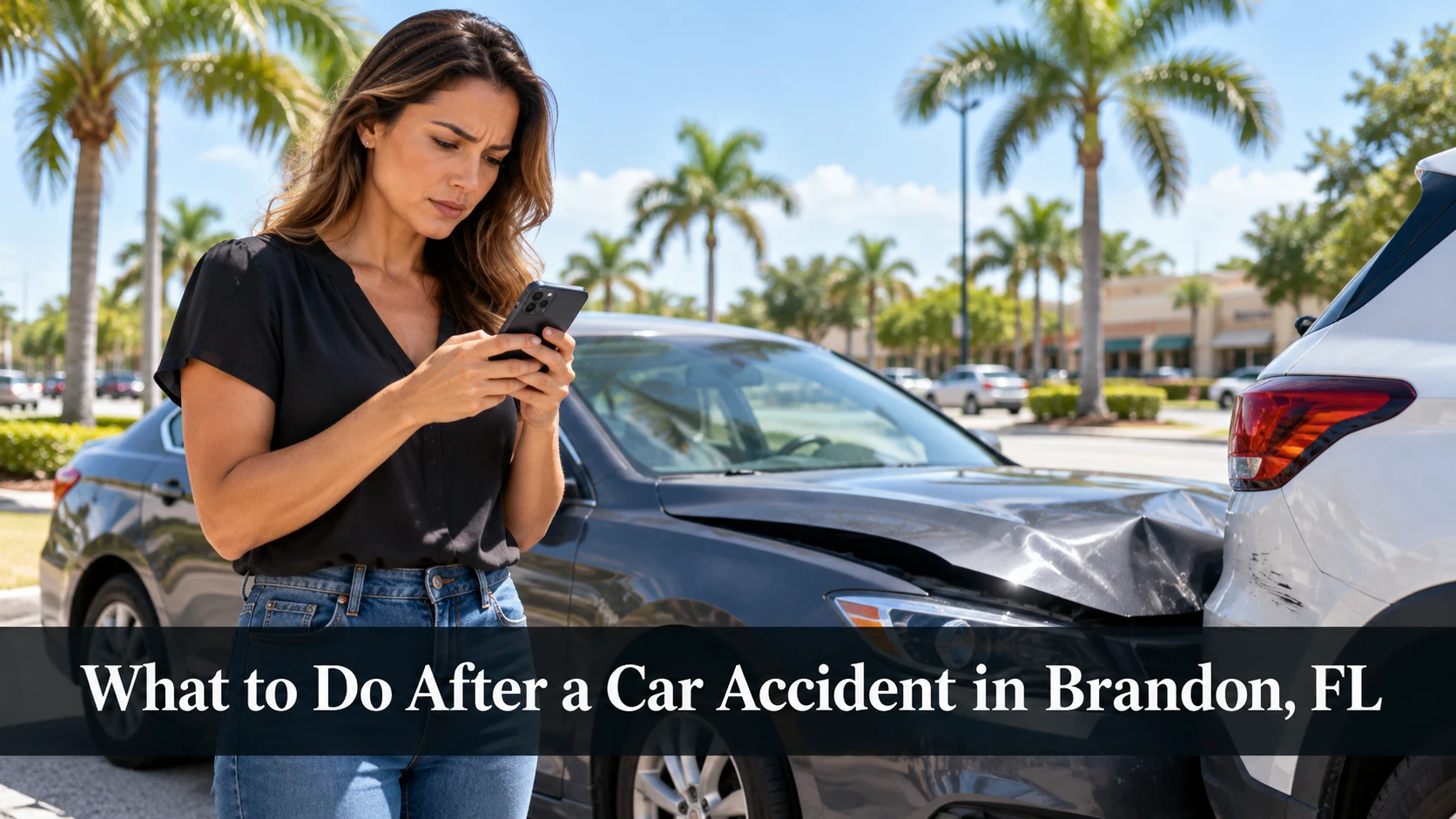
    Illustrative image. The picture above is computer-generated. The people, vehicles and events shown are not actual clients or cases.

    A crash can turn an ordinary drive through Brandon into a confusing mix of safety concerns, medical questions, vehicle damage, insurance calls, and paperwork. In the first few minutes, the priority is not building a legal case. It is protecting people, getting appropriate help, and preserving accurate information about what happened.

    This guide offers general educational information for people dealing with a crash in Brandon or elsewhere in Hillsborough County. It is not a substitute for advice about a specific claim, and Florida rules can change. When a question depends on your facts, insurance policy, injuries, or a legal deadline, consider speaking with a qualified Florida attorney.

    First Steps

    Start With Safety and Medical Needs

    If the collision has just occurred, focus first on immediate safety. Move away from active traffic when it is safe to do so, call emergency services when needed, and follow instructions from first responders. If anyone may be injured, medical evaluation matters more than photographs, property damage, or insurance questions.

    Some injuries are obvious at the scene. Others may not become clear until later. If symptoms appear or change, seek appropriate medical attention rather than trying to diagnose the problem yourself. Keep discharge papers, appointment information, and medical records together so you can accurately track what care was received.

    Records & Evidence

    Preserve Basic Information While It Is Fresh

    When circumstances allow, collect objective information. Useful records can include the names and contact information of drivers and witnesses, insurance details, photographs of vehicle damage, photographs of the roadway and traffic controls, and the location and approximate time of the crash.

    Avoid turning documentation into an argument about fault. A calm record of what is visible is more useful than a heated roadside debate. If law enforcement responds, note the agency and any report or incident number provided so the record can be located later.

    Insurance

    Be Careful With Early Insurance Conversations

    Insurance carriers often begin gathering information quickly. That is normal, but a person who is still processing the crash may not yet know the full extent of the injuries, vehicle damage, or other losses. Keep communications accurate and factual. Do not guess about speeds, distances, diagnoses, or future recovery.

    Policy duties and claim procedures vary. Review the applicable policy documents and written notices rather than relying on assumptions about what an insurer will or will not cover. If a question could materially affect a claim, professional guidance may be appropriate.

    Records & Evidence

    Build One Organized Accident File

    A simple file can reduce confusion. Keep the crash report information, photographs, correspondence, medical records, repair estimates, receipts, mileage to appointments, and notes about missed work in one place. A contemporaneous record is easier to understand than trying to reconstruct events months later.

    It can also help to keep a short timeline. Record important dates such as the crash, medical visits, calls with insurers, repair inspections, and written notices. The goal is accuracy, not creating a dramatic narrative.

    Legal Help

    When Legal Questions Become Important

    A lawyer is not necessary for every minor collision, but legal questions become more important when injuries are significant, fault is disputed, multiple vehicles or commercial parties are involved, insurance coverage is unclear, or an insurer disputes responsibility or damages.

    A consultation can help a person understand which issues deserve attention and which records may be relevant. No responsible attorney can determine the value or outcome of a matter from a checklist alone. Every claim depends on its facts, available evidence, applicable law, and insurance coverage.

    Brandon Context

    Brandon-Specific Considerations

    Brandon drivers regularly use busy corridors such as Brandon Boulevard, I-75, the Selmon Expressway, Bloomingdale Avenue, and surrounding commercial roads. Congestion, turning movements, lane changes, and merging can produce very different collision scenarios. The location itself does not determine fault; the evidence surrounding the particular crash does.

    If you are dealing with injuries after a Brandon-area collision and have questions about your options, Glaros Law can discuss the circumstances and whether the firm may be able to assist.

    To learn more, see our Brandon personal injury lawyer, Brandon car accident lawyer, and personal injury pages. If you have questions about your own situation, contact the firm to schedule a free consultation.

    Further Reading

    Official sources on this topic include Florida traffic crash reports (Florida Highway Safety and Motor Vehicles), Section 316.066, Florida Statutes (written crash reports), and Florida insurance requirements (Florida Highway Safety and Motor Vehicles). Statutes, rules, and agency pages can change, so check the current version.

    Legal Information

    This article is for general educational information only. It is not legal advice, does not create an attorney-client relationship, and may not reflect legal changes after publication. Outcomes and legal rights depend on specific facts. Consult a licensed Florida attorney about your circumstances. See our Terms of Use and Legal Disclaimer.

    Frequently Asked Questions

    What to Do After a Car Accident in Brandon, FL

    It is generally better to focus on safety and accurate facts rather than making legal conclusions at the roadside. Fault can depend on evidence that is not yet available.

    Keep crash information, photographs, insurance communications, medical records, repair estimates, receipts, and notes of important dates in one organized file.

    Symptoms can change after an accident. Seek medical attention if you have health concerns, and do not rely on an online article to evaluate an injury.