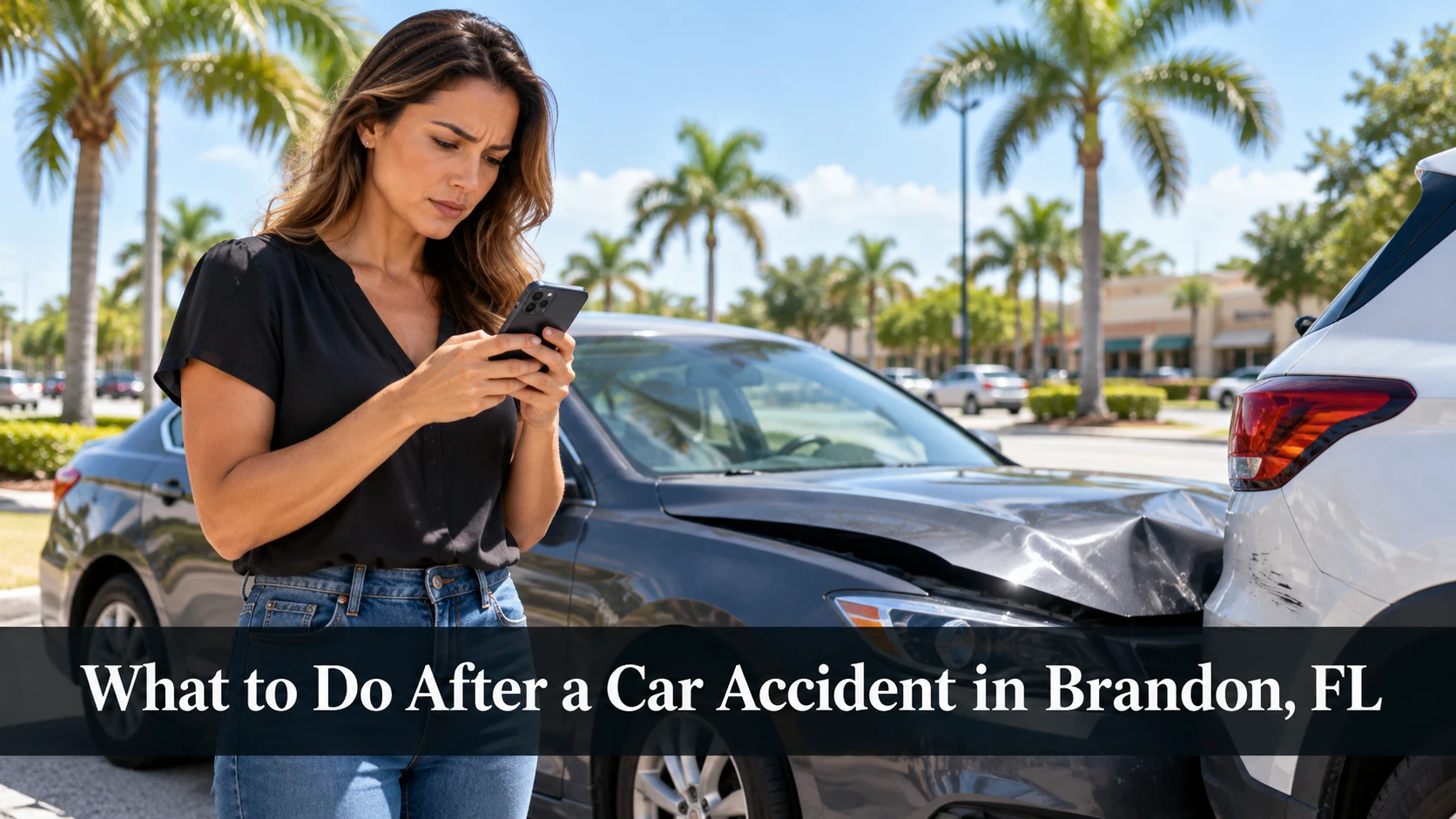
Illustrative image. The picture above is computer-generated. The people, vehicles and events shown are not actual clients or cases.
Brandon’s mix of neighborhood streets, retail corridors, commuter traffic, interstate access, and construction can create many different crash scenarios. It is tempting to describe every collision as “speeding,” “distraction,” or “careless driving,” but a legal evaluation requires more than a label.
The more useful question is: what happened, what evidence shows how it happened, and which actions were legally significant?
01
Rear-End
Rear-End Collisions
Rear-end crashes can occur in stop-and-go traffic, at traffic lights, or when congestion develops unexpectedly. Following distance, speed, visibility, roadway conditions, and the movement of multiple vehicles may all be relevant.
Even when a crash pattern seems familiar, do not assume the legal outcome is automatic. Multi-vehicle impacts and sudden lane changes can complicate the sequence.
02
Intersections
Intersection and Turning Crashes
Brandon-area commercial roads include frequent driveways, signalized intersections, and left-turn movements. A collision may involve questions about signal phases, right of way, sight lines, turning paths, or whether a driver had enough time to react.
Nearby surveillance or dash-camera footage can sometimes help reconstruct what occurred. If video may exist, timing matters because many systems overwrite recordings.
03
Lane Changes
Lane-Change and Merging Collisions
I-75, the Selmon Expressway, entrance ramps, and multilane arterials create frequent merging and lane-change situations. Relevant evidence may include vehicle contact points, roadway markings, dash-camera footage, electronic data, and witness accounts.
A statement that one driver “came over” does not by itself resolve every issue. The full sequence matters.
04
Driver Conduct
Distracted, Fatigued, or Impaired Driving Allegations
Distraction, fatigue, and impairment can be important in some crashes, but allegations should be supported by evidence. Phone records, witness observations, law-enforcement investigation, video, and other information may be relevant depending on the case.
Avoid repeating unverified accusations online. A personal injury claim should be based on provable facts.
05
Conditions
Weather, Visibility, and Road Conditions
Rain, glare, darkness, construction, debris, or poor visibility can affect driving conditions. Those factors do not automatically excuse unsafe conduct, and they do not automatically establish fault either. Drivers and other parties may have different responsibilities depending on the circumstances.
Photographs taken close in time to the collision can help document conditions that later change.
06
Records & Evidence
Evidence Matters More Than the Category
The “cause” listed in a blog article is not the same as legal liability in a specific crash. Reports, physical evidence, witness statements, video, vehicle data, medical records, and current law may all contribute to the analysis.
If you were injured in a Brandon collision and fault is disputed, Glaros Law can review the available information and discuss whether further investigation may be appropriate.
07
Key Takeaway
Practical Takeaway
For Brandon drivers, the most useful local takeaway is to document the specific roadway context rather than relying on generic accident labels. A photo that shows a turn lane, signal placement, construction barrier, or merging distance may be more valuable than a close-up of a dent alone. If a nearby business or home appears to have cameras, record the location so a preservation request can be considered before routine deletion occurs.
This article is for general educational information only. It is not legal advice, does not create an attorney-client relationship, and may not reflect legal changes after publication. Outcomes and legal rights depend on specific facts. Consult a licensed Florida attorney about your circumstances. See our Terms of Use and Legal Disclaimer.
Frequently Asked Questions
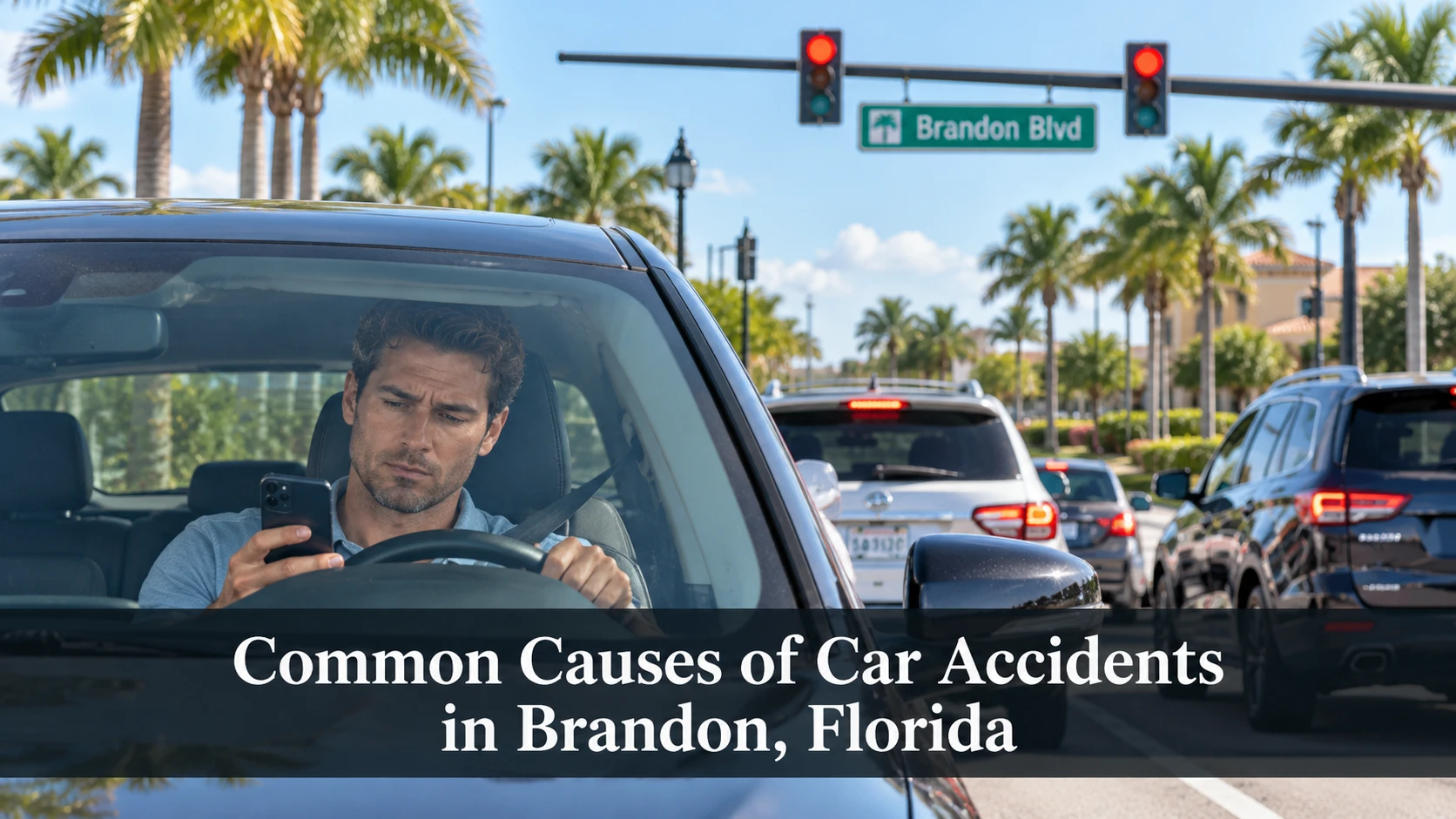
Common Causes of Car Accidents in Brandon, Florida
§
Busy intersections, multilane commercial roads, interstate ramps, and congested corridors can produce many crash types, but this article does not rank locations by accident frequency.
Not necessarily. The sequence, multiple impacts, sudden movements, and other evidence may affect the analysis.
Many commercial and residential systems automatically overwrite recordings after a set retention period.
Illustrative image. The picture above is computer-generated. The people, vehicles and events shown are not actual clients or cases.
Insurance adjusters are part of the ordinary claims process. After a crash or other accident, an adjuster may contact you to gather facts, inspect damage, request records, discuss coverage, or evaluate a claim. The fact that an adjuster calls is not inherently a problem. The challenge is knowing what information is appropriate to provide and when a request deserves closer review.
This article offers general communication principles. Your policy may impose specific duties, and a third-party insurer may stand in a different position than your own carrier.
01
Insurance
Know Who the Adjuster Represents
Start by identifying the company, claim number, and whose insurance is involved. An adjuster for your own carrier is not the same as an adjuster representing another driver or business. The applicable policy relationship can affect what information is requested and why.
Ask for important requests in writing when practical. Written correspondence reduces misunderstandings and makes it easier to review what the carrier is actually asking for.
02
Accuracy
Be Accurate, Not Speculative
Provide facts you know. If you do not know an answer, say that rather than estimating. Early after a collision, people may not know the full medical picture, repair cost, or sequence of events. Guessing can create inconsistencies later.
Avoid diagnosing yourself or predicting recovery. Medical questions are better answered through appropriate care and records.
03
Statements
Understand Requests for Recorded Statements and Authorizations
Some claims involve requests for recorded statements, medical authorizations, or broad releases. Whether you are required to provide something can depend on the policy, the type of claim, and current law.
Before signing a document or agreeing to a broad request you do not understand, read it carefully and consider obtaining advice. A signature can have consequences that a casual phone conversation does not make obvious.
04
Early Offers
Do Not Treat an Early Offer as a Simple Math Problem
An early settlement may arrive before treatment is complete, future needs are clear, or all bills are known. A settlement can also include release language that ends further claims. That does not mean every early offer is unfair; it means the terms should be understood before acceptance.
Ask what the payment covers, what claims are being released, whether outstanding medical balances exist, and whether other claims remain unresolved.
05
Record Keeping
Keep a Communication Log
Record the date, company, adjuster name, claim number, and subject of significant calls. Save emails, letters, estimates, and notices. A simple log helps you avoid repeating information and gives a lawyer a clearer history if legal review becomes necessary.
For a Brandon-area injury claim involving disputed liability, significant injuries, or a settlement you are unsure about, Glaros Law can discuss the circumstances and explain potential next steps.
06
Key Takeaway
Practical Takeaway
Before an important call, write down the basic facts you know and the questions you want answered. Afterward, save a brief note of what was discussed. That simple habit can reduce inconsistencies and make later review easier. If an adjuster asks for a broad authorization, recorded statement, or final release that you do not understand, slow down long enough to read the request and obtain advice if necessary. Being cooperative does not require guessing or signing documents blindly.
This article is for general educational information only. It is not legal advice, does not create an attorney-client relationship, and may not reflect legal changes after publication. Outcomes and legal rights depend on specific facts. Consult a licensed Florida attorney about your circumstances. See our Terms of Use and Legal Disclaimer.
Frequently Asked Questions
Should You Talk to the Insurance Adjuster After an Accident
§
The answer can depend on which insurer is asking, your policy obligations, and the type of claim. Review the request before agreeing.
Read the scope carefully. If you do not understand the request or its consequences, consider legal advice before signing.
Yes, requesting written terms can help you understand what is being offered and what release or conditions may apply.
Illustrative image. The picture above is computer-generated. The people, vehicles and events shown are not actual clients or cases.
Not every accident is a simple story in which one person is entirely responsible and everyone else is fault-free. Drivers may make competing mistakes, property owners and visitors may disagree about what was visible, and several parties may have contributed to the same event. Florida law has rules for allocating fault in negligence cases, but those rules have changed over time and can be fact-sensitive.
This article explains the concept of comparative negligence at a high level. It intentionally avoids stating a current percentage threshold or predicting how the rule applies to a particular claim without reviewing current law and the evidence.
01
Records & Evidence
Shared Fault Is an Evidence Question
Insurance companies and courts do not determine fault from labels alone. They look at evidence. In a vehicle case, that may include photographs, vehicle positions, traffic controls, witness statements, video, electronic data, and the drivers’ accounts. In a premises case, the evidence may include inspection records, photographs, maintenance history, warning signs, and what each person could reasonably observe.
A quick statement such as “I am probably partly to blame” is not a substitute for an investigation.
02
Liability
Why Fault Allocation Matters
When a legal system allocates fault among participants, the allocation can affect whether and how damages are recoverable. The precise effect depends on current Florida law and the facts of the case.
Because Florida’s comparative-fault framework has been amended, older articles may describe a rule that no longer applies to newer incidents. Before publishing an exact formula, percentage, or cutoff, verify the current statute and any relevant exceptions.
03
Liability
Common Situations Where Fault May Be Disputed
Shared-fault arguments often arise in lane-change crashes, intersection collisions, pedestrian or bicycle incidents, multi-vehicle pileups, and slip-and-fall matters. One party may argue that another failed to keep a proper lookout, ignored a warning, followed too closely, turned unexpectedly, or otherwise contributed to the event.
Those arguments are allegations, not conclusions. The evidence and applicable legal standards determine what weight they receive.
04
Next Steps
What You Can Do When Fault Is Contested
Preserve objective records. Keep photographs, report information, witness contact details, communications, and any available video. Avoid editing or posting accident footage in a way that could remove context.
If an insurer asks for a recorded statement or presents a fault determination you do not understand, consider getting legal advice before making important decisions. A lawyer can review the evidence and explain the legal framework that applies to the incident date.
05
Legal Review
Why Legal Review Should Be Current
Search results can preserve outdated law for years. That is especially risky with comparative negligence because a change in the governing rule can materially affect a claim. A responsible law-firm article should identify the concept, direct readers to current authority, and avoid turning a general educational page into individualized legal advice.
For a Brandon-area injury matter involving disputed responsibility, Glaros Law can review the facts and explain how current Florida law may apply.
06
Key Takeaway
Practical Takeaway
If an insurer assigns you a percentage of fault, ask what evidence supports that position. A number in a claim note is not self-proving. Compare it with photographs, video, witness accounts, reports, and the physical sequence of the event. Because the legal effect of shared fault depends on current Florida law, the next step is not to negotiate percentages from memory; it is to understand the evidence and have the governing rule verified for the incident date.
This article is for general educational information only. It is not legal advice, does not create an attorney-client relationship, and may not reflect legal changes after publication. Outcomes and legal rights depend on specific facts. Consult a licensed Florida attorney about your circumstances. See our Terms of Use and Legal Disclaimer.
Frequently Asked Questions
How Florida Comparative Negligence Can Affect an Injury Claim
§
It is a framework for addressing situations in which more than one person may have contributed to an injury-producing event.
Not by itself. Fault is evaluated from the evidence and applicable law, not a single phrase viewed in isolation.
Florida negligence law has changed over time, so older online explanations may not accurately describe the law governing a newer incident.
Illustrative image. The picture above is computer-generated. The people, vehicles and events shown are not actual clients or cases.
Learning that another driver may be uninsured can make an already stressful crash feel much worse. It does not automatically mean there are no options, but it changes the questions that need to be asked.
Coverage can depend on the injured person’s policy, other potentially applicable policies, vehicle ownership, the people involved, and the facts of the collision. This article explains the general framework without assuming that any particular coverage applies.
01
Insurance
Confirm the Insurance Situation First
Do not rely only on what a driver says at the scene. Insurance information can be incomplete, expired, or misunderstood. A crash report, carrier verification, and policy review may clarify whether coverage existed on the date of the accident.
Likewise, “uninsured” and “underinsured” are not always the same problem. A driver may have some coverage but not enough to address the losses being claimed.
02
Insurance
Review Your Own Auto Policy
Your own policy may contain coverages that become relevant after a collision involving an uninsured or underinsured driver. Whether a coverage applies depends on the policy and current Florida law.
Locate the complete policy and declarations page rather than relying on an insurance card. If you are unsure what a provision means, ask the carrier for a written explanation or have the policy reviewed by a qualified professional.
03
Parties
Identify Every Potentially Relevant Party
A collision can involve more than the person behind the wheel. Vehicle ownership, employment relationships, commercial use, and other facts may affect who is potentially responsible. That does not mean every owner or employer is liable; it means the relationships should be investigated before conclusions are drawn.
This can be particularly important in crashes involving delivery vehicles, company cars, rideshare activity, or borrowed vehicles.
04
Records & Evidence
Preserve Evidence Even When Coverage Looks Limited
Low or uncertain coverage does not make evidence irrelevant. Photographs, witness information, crash records, medical documentation, and communications can still matter. Coverage questions sometimes take time to resolve.
Avoid abandoning documentation because an early conversation makes the situation seem hopeless. At the same time, avoid assuming that a lawyer can create insurance or assets where none exist.
05
Caution
Be Wary of Guarantees
An uninsured-driver case is a good example of why settlement promises are inappropriate. The strength of liability, severity of injury, policy language, available coverage, collectability, and other facts all influence the practical options.
A careful evaluation begins with documents and evidence, not a guaranteed number.
06
Legal Help
Questions for a Brandon Car Accident Attorney
If an uninsured or underinsured motorist is involved, ask what policies should be reviewed, whether additional parties need investigation, what notices may be required, and what evidence should be preserved.
Glaros Law can review a Brandon-area collision and discuss whether the firm may be able to help investigate insurance and liability issues.
07
Key Takeaway
Practical Takeaway
The practical goal is to replace assumptions with documents. Confirm the other driver’s insurance status, locate your own complete policy, preserve the crash evidence, and keep written carrier correspondence. If the available coverage is uncertain or the injuries are significant, a legal review can help identify additional policies or parties that deserve investigation. That review cannot guarantee a source of recovery, but it can prevent an early “there is no insurance” conclusion from ending the analysis before the relevant records are checked.
This article is for general educational information only. It is not legal advice, does not create an attorney-client relationship, and may not reflect legal changes after publication. Outcomes and legal rights depend on specific facts. Consult a licensed Florida attorney about your circumstances. See our Terms of Use and Legal Disclaimer.
Frequently Asked Questions
What Happens If the Other Driver Has No Insurance in Florida
§
Not necessarily. Potential options depend on available policies, responsible parties, assets, and the facts. A claim-specific review is needed.
Locate the full auto policy and declarations page, along with the crash report information and any correspondence from insurers.
Do not assume coverage applies. Availability and scope depend on the policy, elections, and applicable law.
Illustrative image. The picture above is computer-generated. The people, vehicles and events shown are not actual clients or cases.
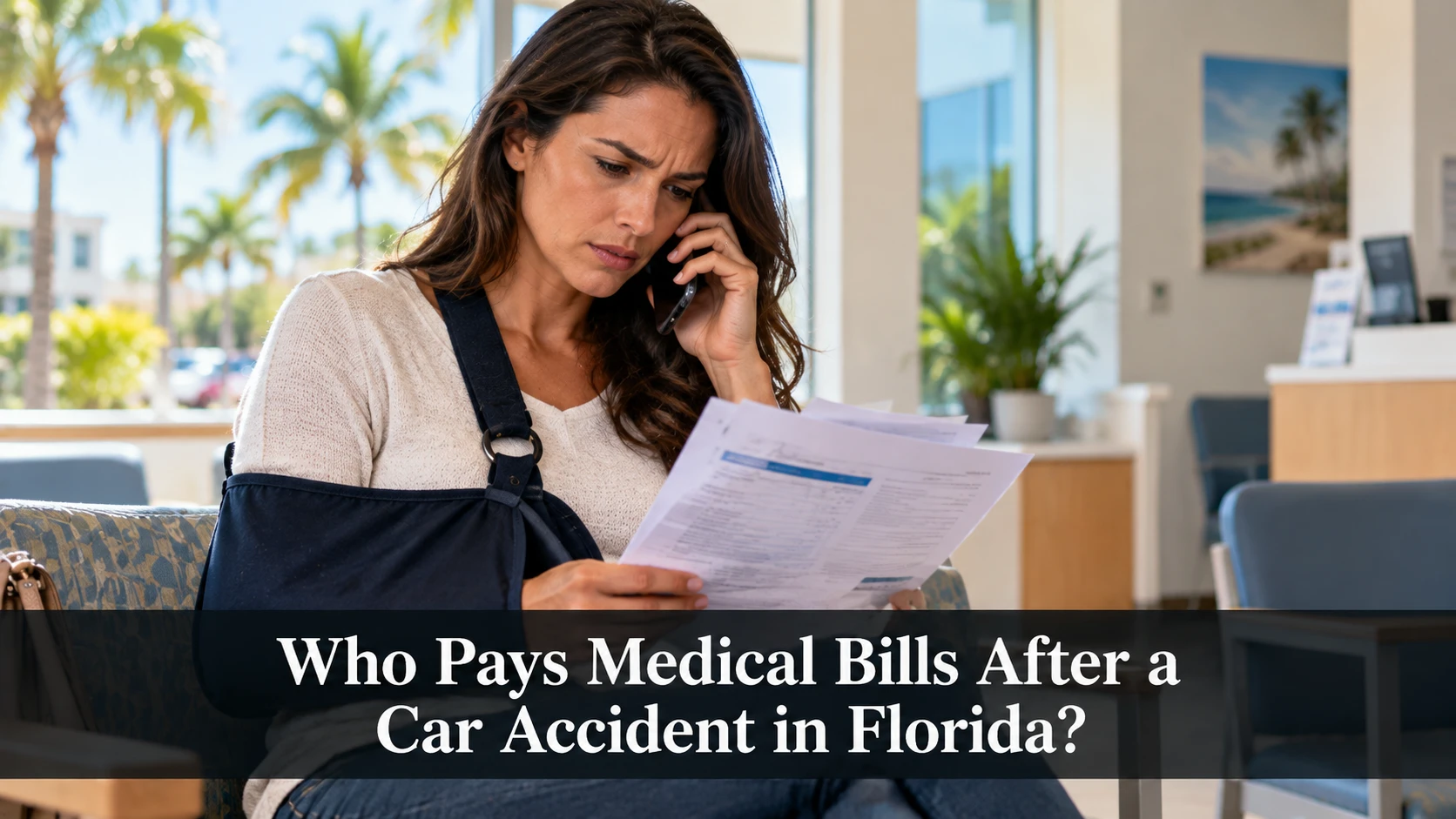
Medical bills are often one of the first financial concerns after a crash. Florida’s insurance system can make the answer more complicated than “the at-fault driver pays everything.” Different forms of insurance, policy terms, medical billing practices, and liability issues may interact.
Because coverage rules and statutory requirements can change, this article does not state a universal payment formula. Instead, it explains the main questions to ask and the records to keep.
01
Billing
The Medical Provider Needs Billing Information
Hospitals, physicians, imaging centers, therapists, and other providers may ask for auto-insurance information, health-insurance information, or details about how the injury occurred. Provide accurate information and keep copies of what you submit.
If a bill is denied, reduced, or redirected, ask for the written explanation rather than assuming the balance is correct. Billing errors and coordination issues can occur even when no one is disputing that treatment took place.
02
Insurance
Auto Insurance May Be Part of the Picture
Florida has specific auto-insurance rules that may affect how certain medical expenses are handled after a crash. The exact application can depend on current law, policy language, timing, eligibility, and the facts.
Rather than relying on an old article for coverage limits or deadlines, review the current policy and verify the current Florida rules. If coverage is disputed, written carrier correspondence is especially important.
03
Insurance
Health Insurance Can Also Matter
Depending on the circumstances, health insurance may pay some accident-related care subject to the plan’s terms. A health insurer may later assert reimbursement or other rights depending on the plan and the claim. Those issues can be technical and should be reviewed before settlement.
Keep explanations of benefits, invoices, and notices. The amount a provider charges, the amount an insurer allows, and the amount a patient owes can be different numbers.
04
Liability
A Liability Claim Is Not the Same as Immediate Bill Payment
Even when another party may ultimately be responsible for an accident, a liability claim does not necessarily cause medical providers to wait for the case to end. Bills may continue to arrive while fault and damages are being evaluated.
This is one reason injury claims can require coordination among providers, insurers, and legal counsel. A settlement discussion should account for known medical obligations rather than focusing only on a gross settlement number.
05
Records & Evidence
What Records Should You Keep?
Maintain copies of medical bills, explanations of benefits, insurance notices, receipts, medical records, and any letters regarding liens or reimbursement. If a provider sends a balance to collections or gives a deadline, do not ignore it while assuming the injury claim will automatically resolve the issue.
An organized record lets a lawyer or insurance professional identify what has been billed, what has been paid, what remains disputed, and what may need further review.
06
Next Step
Get a Claim-Specific Answer
There is no responsible way to identify who will pay every medical bill without reviewing the applicable policies and facts. If you were injured in a Brandon-area crash, Glaros Law can discuss the insurance and liability issues that may affect the claim.
This article is educational only. It should not be used to make decisions about medical treatment, insurance compliance, or settlement of a specific matter.
This article is for general educational information only. It is not legal advice, does not create an attorney-client relationship, and may not reflect legal changes after publication. Outcomes and legal rights depend on specific facts. Consult a licensed Florida attorney about your circumstances. See our Terms of Use and Legal Disclaimer.
Frequently Asked Questions
Who Pays Medical Bills After a Car Accident in Florida
§
Not necessarily. Medical billing and liability claims may proceed on different timelines and can involve multiple coverage sources.
That depends on the circumstances and plan terms. Ask the provider and insurers how the claim is being processed and obtain written explanations.
They help show what was billed, allowed, paid, denied, or assigned to the patient and can be important when reviewing outstanding balances.
Illustrative image. The picture above is computer-generated. The people, vehicles and events shown are not actual clients or cases.
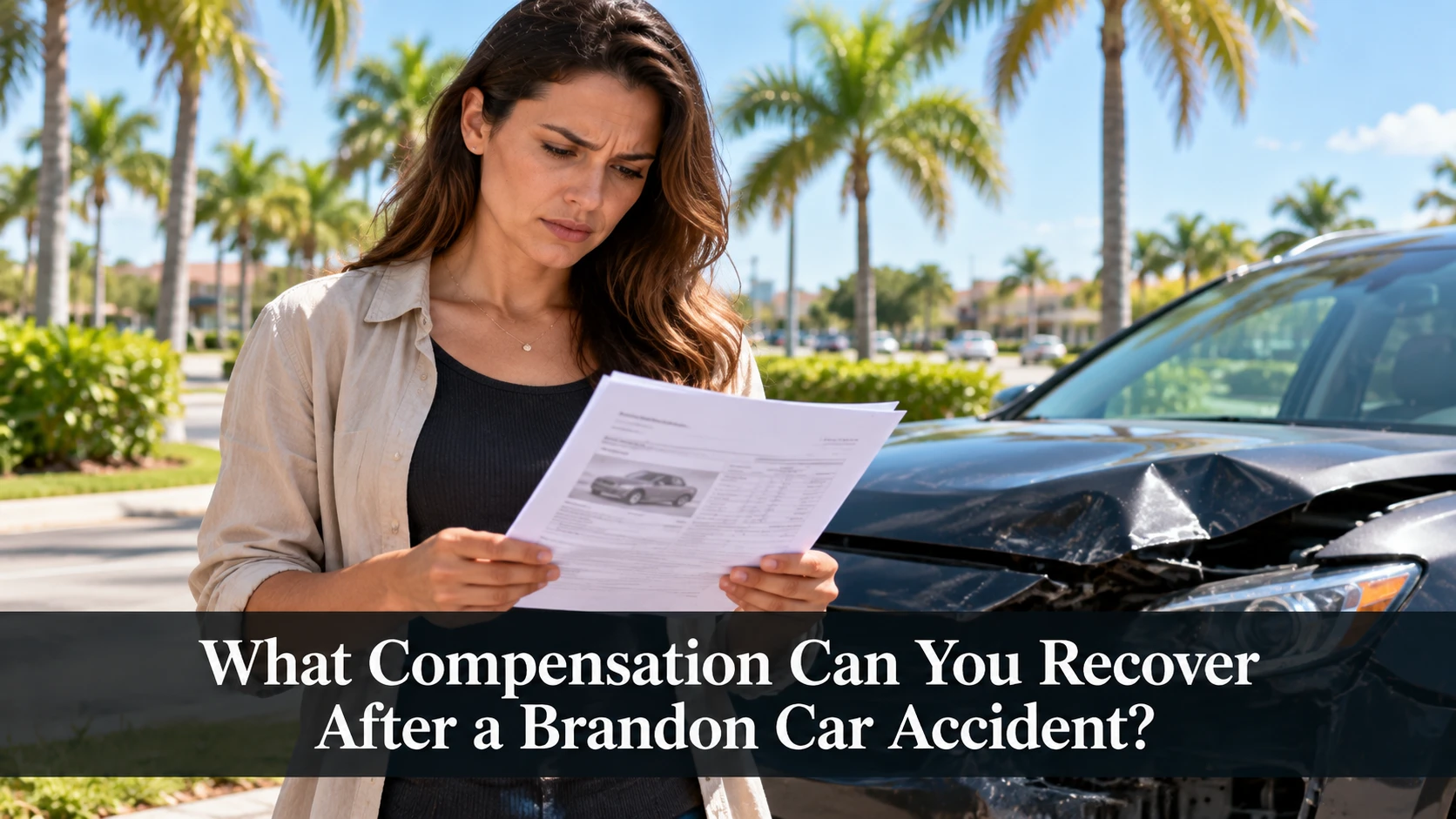
After a crash, it is natural to ask what an insurance claim or personal injury case might cover. The answer is not a preset settlement table. Compensation depends on the facts, the injuries, the available evidence, applicable Florida law, insurance coverage, and whether another party is legally responsible.
A more useful starting point is to understand the categories of losses that may be evaluated. This article provides a general overview and does not predict what any person can recover.
01
Compensation
Medical Expenses and Treatment-Related Costs
Accident-related medical care can include emergency treatment, diagnostic testing, physician visits, therapy, medication, and other medically appropriate services. Which expenses are recoverable, who initially pays them, and how insurance interacts with a claim can depend on the policies and circumstances involved.
Keep complete records. Bills alone may not tell the full story, and medical records alone may not show what was actually charged or paid. An organized file helps a professional understand the financial and medical picture.
02
Compensation
Lost Income and Changes in Ability to Work
An injury can affect work in different ways. Some people miss a few shifts. Others need modified duties, use paid leave, or experience a longer interruption. In more serious matters, future earning ability may become an issue.
Documentation can include pay records, employer communications, tax information, work restrictions, and other reliable records. Avoid assuming that every missed dollar is automatically recoverable; legal causation and proof still matter.
03
Property
Vehicle and Other Property Losses
Vehicle repair or total-loss issues are separate from the physical injury itself, but they are often part of the post-crash process. Repair estimates, photographs, towing invoices, rental records, and valuation documents can be useful.
Property claims can also involve disagreements about preexisting damage, market value, repair quality, and loss of use. These questions are usually evaluated separately from bodily injury issues.
04
Injuries
Nonfinancial Effects of an Injury
Personal injury law may also consider certain nonfinancial harms in appropriate cases, but these are highly fact-specific and should not be reduced to a simple multiplier. The seriousness and duration of the injury, medical evidence, functional limitations, and other factors may matter.
Be skeptical of websites promising a formula such as “medical bills times three.” Real claims do not fit that neatly, and legal standards can change.
05
Variation
Why Two Similar Crashes Can Have Very Different Outcomes
Two rear-end collisions at the same intersection can produce entirely different claims. One may involve minimal vehicle damage and a short recovery. Another may involve surgery, disputed causation, multiple insurers, or significant work loss.
The available insurance can also affect practical recovery. A strong liability case does not create coverage that does not exist. Identifying policies and responsible parties is part of evaluating the matter.
06
Claim Value
How to Think About Claim Value Responsibly
Instead of asking for an instant number, ask what evidence supports each claimed loss, what issues are disputed, what coverage is available, and what current Florida law permits. That approach is slower than an online calculator but much more meaningful.
Glaros Law can review a Brandon-area accident and discuss the factors that may affect the claim. Any evaluation should be based on the actual facts, not a promise or average settlement figure.
This article is for general educational information only. It is not legal advice, does not create an attorney-client relationship, and may not reflect legal changes after publication. Outcomes and legal rights depend on specific facts. Consult a licensed Florida attorney about your circumstances. See our Terms of Use and Legal Disclaimer.
Frequently Asked Questions
What Compensation Can You Recover After a Brandon Car Accident
§
Average figures are usually not useful for an individual claim because injuries, liability, evidence, insurance, and losses vary widely.
In appropriate circumstances, work-related losses may be evaluated, but they must be supported and legally connected to the accident.
No. Property damage is one piece of evidence. Injury claims are evaluated using medical, factual, legal, and insurance information.
Illustrative image. The picture above is computer-generated. The people, vehicles and events shown are not actual clients or cases.
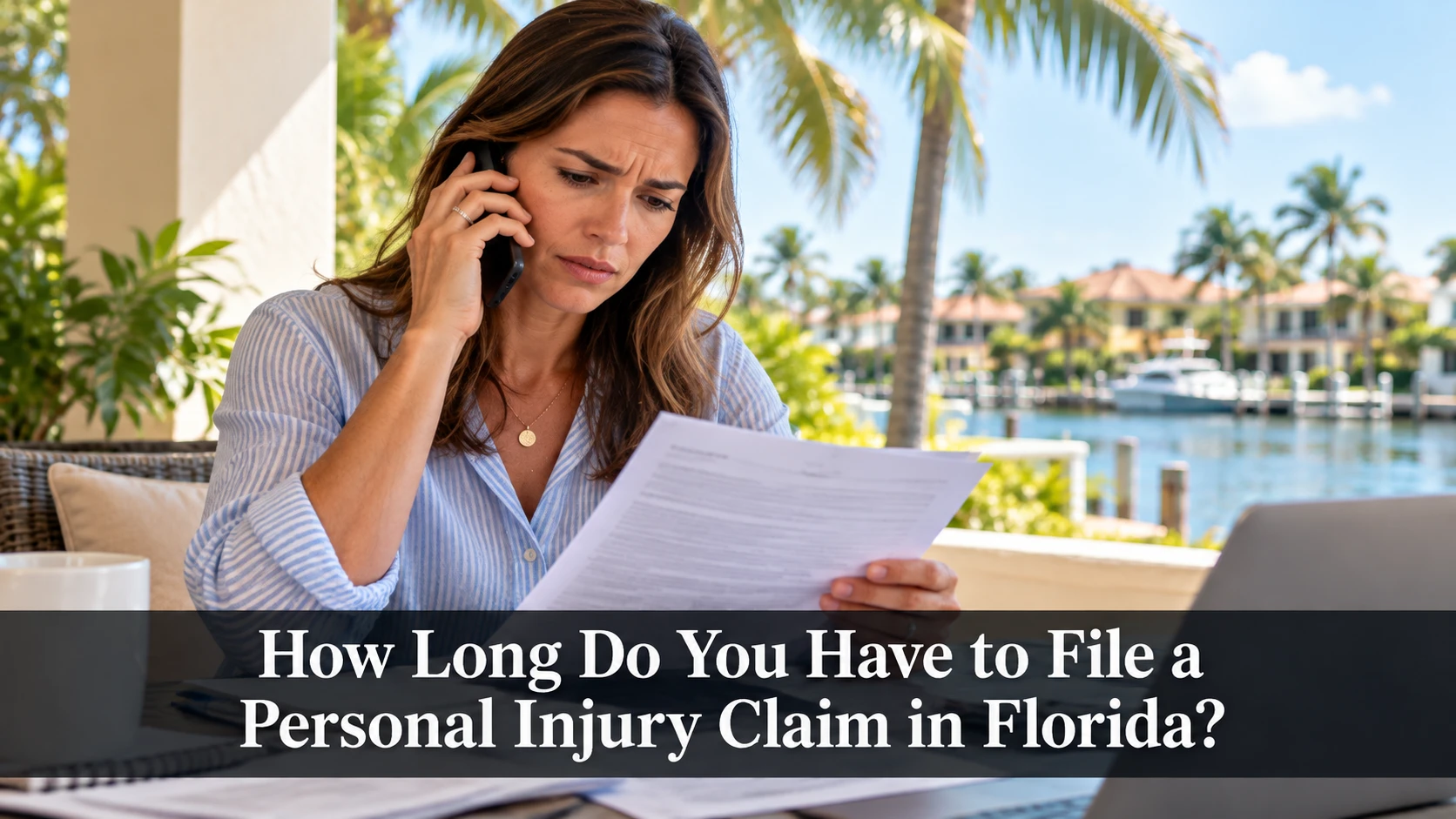
People often search for a single number when they ask how long they have to file a Florida personal injury claim. The problem is that a general internet answer can be dangerously incomplete. Different claims may be governed by different rules, and exceptions, defendant identity, the nature of the injury, and procedural requirements can matter.
Florida laws have also changed over time. For that reason, this article intentionally does not function as a deadline calculator. It explains the issues that determine timing and why a current, claim-specific review is safer than relying on an old blog post or a date copied from a search result.
01
Timing
“Statute of Limitations” Is Only Part of the Timing Question
A statute of limitations generally sets a time period for bringing a legal action. But that is not the only timing issue an injured person may face. Insurance policies may contain notice provisions. Claims involving public entities can have special procedures. Evidence may disappear long before a lawsuit deadline expires.
The practical lesson is simple: the fact that a lawsuit deadline may be months or years away does not mean waiting is harmless.
02
The Claim
The Type of Claim Matters
A motor-vehicle negligence case, a premises matter, a wrongful death claim, a claim involving a government entity, and a claim involving a defective product can raise different legal questions. Even claims arising from the same event may not share identical timing rules.
That is why a legal professional begins by identifying the potential claims and parties rather than starting with a generic countdown clock.
03
Changing Law
Why Online Deadline Articles Age Poorly
Statutes can be amended, court decisions can affect how rules are interpreted, and older articles may remain indexed long after the law changes. A page that accurately described Florida law several years ago may no longer be reliable today.
Before publishing or relying on an exact deadline, verify the current Florida statute and any case-specific exceptions. Glaros Law recommends treating deadline information as something to confirm, not something to estimate.
04
Records & Evidence
Evidence Has Its Own Clock
Even when a formal deadline is not close, evidence can become harder to obtain. Security footage may be routinely overwritten. Vehicles and property can be repaired. Witness contact information may be lost. Digital records may be deleted under ordinary retention policies.
Early preservation can matter because a case is built from evidence, not just a calendar. Keeping photographs, documents, report numbers, and communications organized is a practical first step.
05
Timing
When to Ask for a Deadline Review
If an injury may lead to a claim, consider getting the timing issue reviewed early, especially if the incident involved a government vehicle or property, a death, a minor, an unusual defendant, a delayed diagnosis, or an event that happened some time ago.
A lawyer evaluating timing should know the date of the incident, the type of event, the identity of potentially responsible parties, and any notices already received or sent. The lawyer may need additional facts before giving a reliable answer.
06
A Better Question
A Better Question Than “How Many Years Do I Have?”
Instead of relying on a generic number, ask: “What deadlines and notice requirements apply to this specific matter under current Florida law?” That question is narrower, safer, and more likely to produce a useful answer.
If your accident or injury occurred in Brandon or the surrounding Tampa Bay area, Glaros Law can discuss the circumstances and identify whether a deadline issue should be reviewed promptly.
This article is for general educational information only. It is not legal advice, does not create an attorney-client relationship, and may not reflect legal changes after publication. Outcomes and legal rights depend on specific facts. Consult a licensed Florida attorney about your circumstances. See our Terms of Use and Legal Disclaimer.
Frequently Asked Questions
How Long Do You Have to File a Personal Injury Claim in Florida
§
Because the applicable time limit can depend on the claim, defendant, event date, exceptions, and current law. A single number can mislead readers.
Yes. Video retention, repairs, lost contact information, and ordinary record deletion can affect evidence even when a formal legal deadline is not imminent.
Use current Florida statutory and court authorities and seek qualified legal advice for a specific matter.
Illustrative image. The picture above is computer-generated. The people, vehicles and events shown are not actual clients or cases.
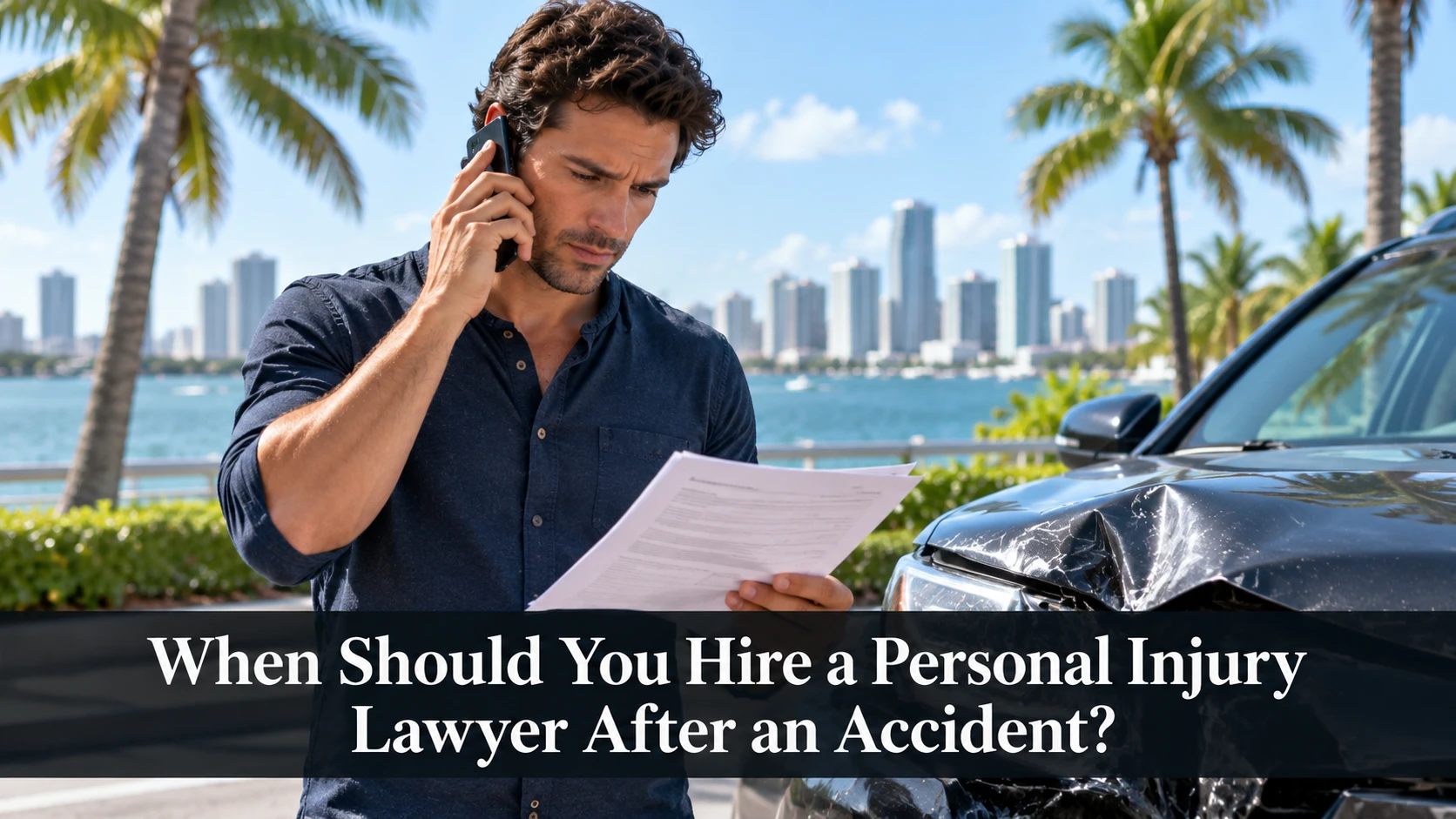
After an accident, many people wonder whether they should call a lawyer immediately, handle the insurance process themselves, or wait to see how things develop. There is no universal answer. A small property-damage claim and a collision involving surgery, disputed fault, or several insurance policies present very different issues.
The most useful question is not “Do I need a lawyer because I was in an accident?” It is “Are there legal, medical, insurance, or evidence issues that I do not feel comfortable evaluating on my own?” This article provides general information, not advice about any particular claim.
01
Legal Help
Situations That Often Justify a Consultation
A consultation may be worth considering when an injury is significant or ongoing, fault is disputed, the other party denies responsibility, a commercial vehicle is involved, several people may share responsibility, or there are questions about available insurance.
It can also be helpful when an insurer disputes medical treatment, requests extensive information, presents a settlement that is difficult to evaluate, or raises policy exclusions or coverage questions. Consulting an attorney does not require filing a lawsuit. It can simply help clarify the issues.
02
Timing
Why Timing Can Matter Without Rushing a Decision
Evidence can become harder to obtain with time. Vehicles are repaired, video may be overwritten, witnesses move, and memories fade. Florida law also imposes deadlines on different types of claims, but the applicable deadline can depend on the type of case and other circumstances.
That does not mean every injured person should sign a representation agreement immediately. It means important questions should not be ignored indefinitely. If you are unsure whether time-sensitive evidence or legal deadlines are involved, ask a qualified Florida lawyer to evaluate that issue specifically.
03
The Role
What a Personal Injury Lawyer Actually Does
A personal injury attorney may investigate the event, identify relevant insurance, collect records, communicate with insurers, evaluate liability issues, document damages, consult appropriate experts, negotiate a resolution, and, when warranted, prepare a case for litigation.
The exact work depends on the matter. An ethical lawyer should explain the proposed role, fee arrangement, expected communication, major uncertainties, and what information is needed from the client. No lawyer should guarantee a settlement amount or outcome.
04
Preparation
How to Prepare for a Consultation
Bring whatever records you already have, but do not delay a conversation merely because the file is incomplete. Helpful materials can include photographs, a crash or incident report number, insurance information, medical provider names, correspondence from carriers, wage information, and a basic timeline.
Prepare questions too. Ask who would handle the matter, how the firm communicates, what costs may arise, how fees work, what the major issues appear to be, and what the lawyer cannot yet know. A good consultation should leave you better informed even when the answer is that more information is needed.
05
Choosing a Lawyer
Choosing the Right Fit in Brandon
For a Brandon-area injury matter, local familiarity can be useful, but it should not replace substantive experience. Evaluate whether the attorney regularly handles the type of incident involved, communicates clearly, sets realistic expectations, and can explain the process without pressuring you.
Glaros Law serves people with personal injury questions in the Tampa Bay area. If you want to discuss an accident in Brandon, the firm can review the circumstances and explain whether representation may be appropriate.
This article is for general educational information only. It is not legal advice, does not create an attorney-client relationship, and may not reflect legal changes after publication. Outcomes and legal rights depend on specific facts. Consult a licensed Florida attorney about your circumstances. See our Terms of Use and Legal Disclaimer.
Frequently Asked Questions
When Should You Hire a Personal Injury Lawyer After an Accident
§
No. The need for counsel depends on the seriousness and complexity of the matter, including injury, fault, insurance, evidence, and disputed issues.
No. A consultation is a way to understand possible options. Many matters never proceed to trial.
A responsible evaluation generally depends on facts, medical information, liability, insurance, and other evidence. Early guarantees are a warning sign.
Illustrative image. The picture above is computer-generated. The people, vehicles and events shown are not actual clients or cases.
A crash can turn an ordinary drive through Brandon into a confusing mix of safety concerns, medical questions, vehicle damage, insurance calls, and paperwork. In the first few minutes, the priority is not building a legal case. It is protecting people, getting appropriate help, and preserving accurate information about what happened.
This guide offers general educational information for people dealing with a crash in Brandon or elsewhere in Hillsborough County. It is not a substitute for advice about a specific claim, and Florida rules can change. When a question depends on your facts, insurance policy, injuries, or a legal deadline, consider speaking with a qualified Florida attorney.
01
First Steps
Start With Safety and Medical Needs
If the collision has just occurred, focus first on immediate safety. Move away from active traffic when it is safe to do so, call emergency services when needed, and follow instructions from first responders. If anyone may be injured, medical evaluation matters more than photographs, property damage, or insurance questions.
Some injuries are obvious at the scene. Others may not become clear until later. If symptoms appear or change, seek appropriate medical attention rather than trying to diagnose the problem yourself. Keep discharge papers, appointment information, and medical records together so you can accurately track what care was received.
02
Records & Evidence
Preserve Basic Information While It Is Fresh
When circumstances allow, collect objective information. Useful records can include the names and contact information of drivers and witnesses, insurance details, photographs of vehicle damage, photographs of the roadway and traffic controls, and the location and approximate time of the crash.
Avoid turning documentation into an argument about fault. A calm record of what is visible is more useful than a heated roadside debate. If law enforcement responds, note the agency and any report or incident number provided so the record can be located later.
03
Insurance
Be Careful With Early Insurance Conversations
Insurance carriers often begin gathering information quickly. That is normal, but a person who is still processing the crash may not yet know the full extent of the injuries, vehicle damage, or other losses. Keep communications accurate and factual. Do not guess about speeds, distances, diagnoses, or future recovery.
Policy duties and claim procedures vary. Review the applicable policy documents and written notices rather than relying on assumptions about what an insurer will or will not cover. If a question could materially affect a claim, professional guidance may be appropriate.
04
Records & Evidence
Build One Organized Accident File
A simple file can reduce confusion. Keep the crash report information, photographs, correspondence, medical records, repair estimates, receipts, mileage to appointments, and notes about missed work in one place. A contemporaneous record is easier to understand than trying to reconstruct events months later.
It can also help to keep a short timeline. Record important dates such as the crash, medical visits, calls with insurers, repair inspections, and written notices. The goal is accuracy, not creating a dramatic narrative.
05
Legal Help
When Legal Questions Become Important
A lawyer is not necessary for every minor collision, but legal questions become more important when injuries are significant, fault is disputed, multiple vehicles or commercial parties are involved, insurance coverage is unclear, or an insurer disputes responsibility or damages.
A consultation can help a person understand which issues deserve attention and which records may be relevant. No responsible attorney can determine the value or outcome of a matter from a checklist alone. Every claim depends on its facts, available evidence, applicable law, and insurance coverage.
06
Brandon Context
Brandon-Specific Considerations
Brandon drivers regularly use busy corridors such as Brandon Boulevard, I-75, the Selmon Expressway, Bloomingdale Avenue, and surrounding commercial roads. Congestion, turning movements, lane changes, and merging can produce very different collision scenarios. The location itself does not determine fault; the evidence surrounding the particular crash does.
If you are dealing with injuries after a Brandon-area collision and have questions about your options, Glaros Law can discuss the circumstances and whether the firm may be able to assist.
This article is for general educational information only. It is not legal advice, does not create an attorney-client relationship, and may not reflect legal changes after publication. Outcomes and legal rights depend on specific facts. Consult a licensed Florida attorney about your circumstances. See our Terms of Use and Legal Disclaimer.
Frequently Asked Questions
What to Do After a Car Accident in Brandon, FL
§
It is generally better to focus on safety and accurate facts rather than making legal conclusions at the roadside. Fault can depend on evidence that is not yet available.
Keep crash information, photographs, insurance communications, medical records, repair estimates, receipts, and notes of important dates in one organized file.
Symptoms can change after an accident. Seek medical attention if you have health concerns, and do not rely on an online article to evaluate an injury.
Key information and considerations from this
Glaros Law legal insight.
Florida LawLegal InsightsGlaros Law
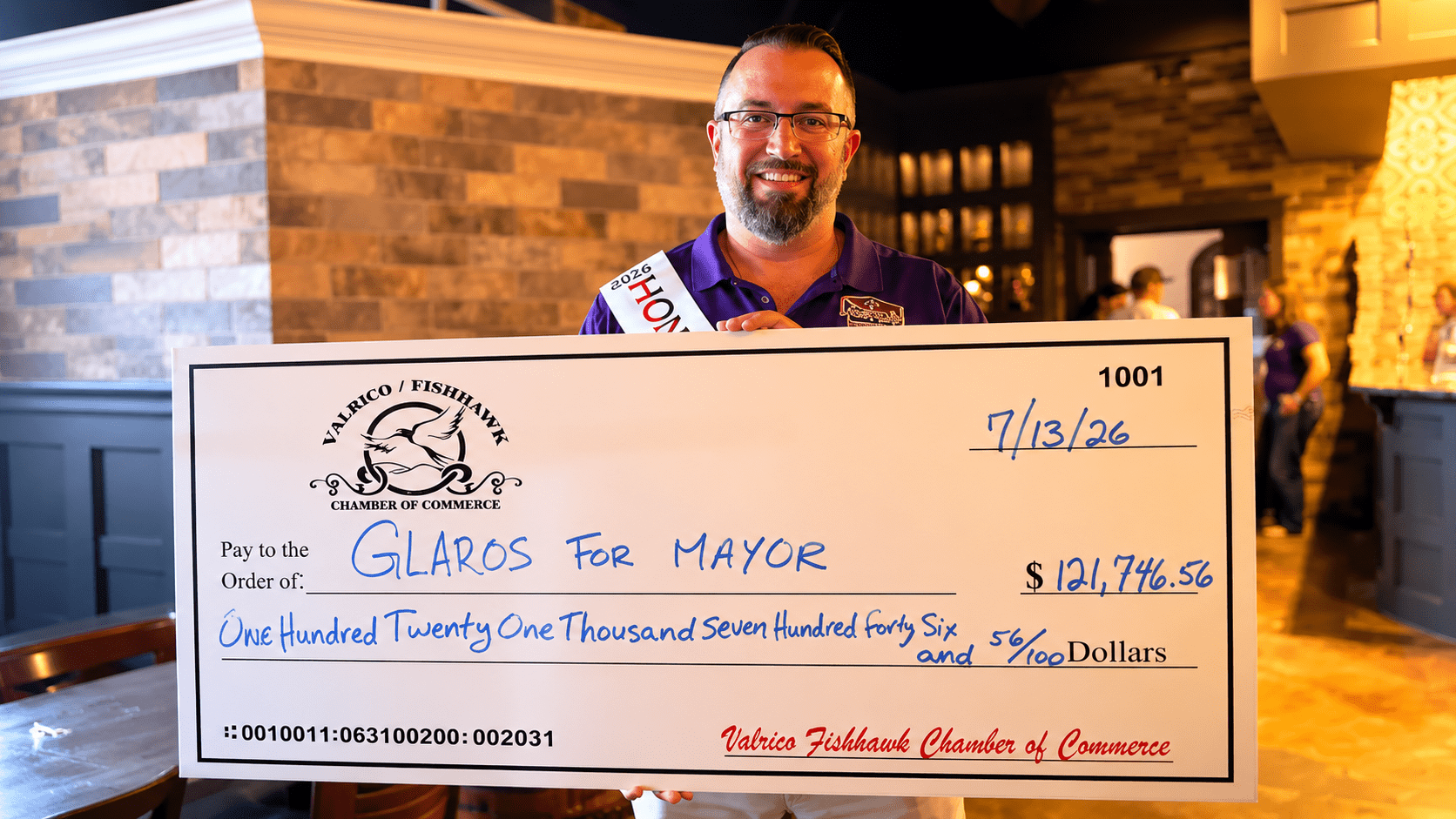
Community involvement took on record-setting proportions in East Hillsborough this summer when Steve Glaros of
Law Offices of Steven J. Glaros & Associates
was named the 2026 Honorary Mayor of East Hillsborough.
Glaros earned the honorary title after raising $121,746.56 for three local charitable organizations during the 2026 Honorary Mayor’s Race. His fundraising total established a new record for the annual community campaign and helped contribute to an even larger milestone: the two candidates participating in the 2026 race collectively raised $169,643.99 for five local charities.
For Glaros, whose firm brings more than 30 years of combined legal experience to families throughout the Tampa Bay area, the campaign offered an opportunity to extend his community involvement beyond the legal services provided through his Brandon office.
01
Community Tradition
What Is the East Hillsborough Honorary Mayor’s Race?
Despite the title, the Honorary Mayor of East Hillsborough is not an elected government position. The Honorary Mayor’s Race is a non-political fundraising competition supported by the Valrico FishHawk Chamber of Commerce.
Candidates select local charities or nonprofit organizations they want to support and then spend the campaign organizing fundraising events, conducting community outreach and encouraging residents and businesses to participate. At the end of the campaign, the candidate who raises the most money receives the title of Honorary Mayor for the year.
The structure transforms a friendly community competition into direct support for organizations serving people and animals throughout East Hillsborough and the surrounding Tampa Bay area.
The 2026 race officially began June 1 and included a month of fundraising events and community activities before concluding June 30. The results were celebrated during a July 13 wrap-up event at The Boulevard at FishHawk in Lithia.
02
Record Fundraising
A Record $121,746.56 Raised by Steve Glaros
The scale of the 2026 campaign set it apart from previous years.
Individual Campaign Total
$121,746.56
Raised by Steve Glaros during the 2026 Honorary Mayor’s Race
$
Steve Glaros raised $121,746.56 during his campaign, establishing an all-time record for the amount raised by an individual candidate in the Honorary Mayor’s Race.
Each organization addresses a different need within the community, allowing the campaign to support children, families, youth development and animal welfare.
03
Community Impact
Three Local Organizations Supported by the Glaros Campaign
01
Supporting High 5 Inc.
High 5 Inc. provides programs and opportunities designed to support young people in the community. Its work includes youth programming, mentorship and activities intended to provide children with safe and constructive environments in which to learn, participate and grow.
By including High 5 Inc. among his campaign beneficiaries, Glaros directed a portion of the campaign’s fundraising toward programs serving local youth and families.
The organization was one of three beneficiaries sharing in the funds generated throughout Glaros’s month-long campaign.
02
Supporting Impact Program Inc.
Impact Program Inc. was another beneficiary of the 2026 Glaros campaign.
The organization focuses on youth education, prevention and character development, providing programs intended to help young people develop skills and knowledge that can contribute to healthier decisions and stronger futures.
Its inclusion in the campaign expanded the fundraising effort’s support for children and families throughout the East Hillsborough community.
03
Supporting Raining Cats and Dogs Shelter and Sanctuary
The third organization supported by Glaros was Raining Cats and Dogs Shelter and Sanctuary.
The nonprofit provides care for animals while promoting responsible pet ownership and community involvement. Its work adds an animal welfare component to the broader community causes supported through the Honorary Mayor campaign.
Together, High 5 Inc., Impact Program Inc. and Raining Cats and Dogs Shelter and Sanctuary represented three distinct areas of community service connected through a single fundraising campaign.
04
Community Participation
Community Events Helped Drive the Campaign
The Honorary Mayor’s Race is designed to encourage community participation rather than relying solely on individual donations.
Throughout June, Glaros’s campaign included several events created to bring residents, businesses and supporters together while raising money for the selected charities.
Activities included the Mayor’s Summer Splash Bash, music bingo, a Chef Soiree and Online Auction and an Amazing Race-style event.
The variety of events allowed members of the community to participate in different ways while maintaining the central purpose of raising funds for local nonprofit organizations.
That community-driven structure is an important part of the Honorary Mayor program. Local businesses, residents, volunteers and nonprofit organizations have an opportunity to work together, turning individual events and contributions into a much larger collective result.
05
2026 Campaign Results
The 2026 Race Raised a Record $169,643.99
Glaros was joined in the 2026 Honorary Mayor’s Race by Chris Ciulla, owner of Voodoo Brewing Co. in Valrico.
Ciulla raised $47,897.43 through his campaign, which supported Forgotten Angels and ECHO, the Emergency Care Help Organization.
His fundraising resulted in another first for the program. Ciulla became East Hillsborough’s first-ever Deputy Mayor, creating a new distinction within the Honorary Mayor tradition.
Combined Community Impact
$169,643.99
Raised during the 2026 Honorary Mayor’s Race
2Candidates
5Local Charities
Combined, the campaigns raised $169,643.99 for five local charitable organizations.
The total represented the largest collective fundraising amount in the history of the East Hillsborough Honorary Mayor campaign, according to the Osprey Observer.
The final numbers demonstrate how quickly individual donations, sponsorships, fundraising events and volunteer efforts can accumulate when businesses and residents participate in a shared community initiative.
06
Local Organizations
Five Local Organizations Benefited From the 2026 Race
While the Honorary Mayor title provides a focal point for the annual campaign, the lasting impact of the race can be measured by the organizations receiving the funds.
Glaros’s campaign supported High 5 Inc., Impact Program Inc. and Raining Cats and Dogs Shelter and Sanctuary, while Ciulla’s campaign benefited Forgotten Angels and ECHO.
Forgotten Angels provides assistance to young adults transitioning out of foster care, including support involving housing, education, employment preparation and independent living skills.
ECHO assists individuals and families experiencing hardship by providing access to food, clothing, household necessities, workforce development and other resources intended to help families move toward greater stability.
The five organizations supported during the 2026 campaign serve different populations and needs, but each contributes to the broader network of nonprofit services available throughout East Hillsborough and the Tampa Bay region.
07
Glaros Law
A Community Milestone for Glaros Law
The 2026 Honorary Mayor campaign represents a significant community milestone for Steve Glaros and Glaros Law.
The
Law Offices of Steven J. Glaros & Associates
serves clients from its Brandon, Florida office in matters involving family law, personal injury and estate planning. The firm’s work regularly involves individuals and families facing significant transitions, from divorce and parenting matters to injuries and long-term family planning. Anyone with questions about one of these matters can contact the firm to schedule a free consultation.
The Honorary Mayor campaign provided a different avenue for community involvement by bringing businesses, residents, nonprofit organizations and volunteers together around organizations serving local needs.
Raising more than $121,000 through a single candidate’s campaign also illustrates what coordinated local participation can accomplish. The result was not attributable to one person alone. Fundraising at that scale depended on donors, sponsors, volunteers, businesses, event participants and the organizations that helped bring the campaign together.
08
Looking Forward
Continuing the Honorary Mayor Tradition in East Hillsborough
The Honorary Mayor’s Race has become an annual tradition connecting local business leadership with charitable fundraising.
Rather than campaigning for governmental authority, candidates compete to generate support for nonprofit organizations they believe are making a difference in the community.
The model provides participating charities with more than financial support. The campaign also gives nonprofit organizations additional community exposure, introduces their work to residents and businesses and creates opportunities for new relationships that can continue after the race ends.
For the 2026 campaign, that model produced record results.
Steve Glaros concluded the race with $121,746.56 raised for his three selected charities and the title of 2026 Honorary Mayor of East Hillsborough. Chris Ciulla raised another $47,897.43 and became the community’s inaugural Deputy Mayor.
Together, their campaigns generated $169,643.99 for five organizations serving East Hillsborough residents, families, young people and animals.
Steve Glaros of the Law Offices of Steven J. Glaros & Associates was named the 2026 Honorary Mayor of East Hillsborough after raising $121,746.56 for local charities during the annual Honorary Mayor’s Race.
Steve Glaros raised $121,746.56, setting an all-time individual fundraising record for the East Hillsborough Honorary Mayor’s Race.
Glaros’s campaign benefited High 5 Inc., Impact Program Inc. and Raining Cats and Dogs Shelter and Sanctuary.
Steve Glaros and Chris Ciulla collectively raised $169,643.99 for five local charitable organizations during the 2026 campaign.
No. The Honorary Mayor’s Race is a non-political charitable fundraising competition supported by the Valrico FishHawk Chamber of Commerce. Candidates raise funds for selected charities and nonprofit organizations, and the candidate who raises the most receives the honorary title for the year.